Understand everything about condition-based maintenance

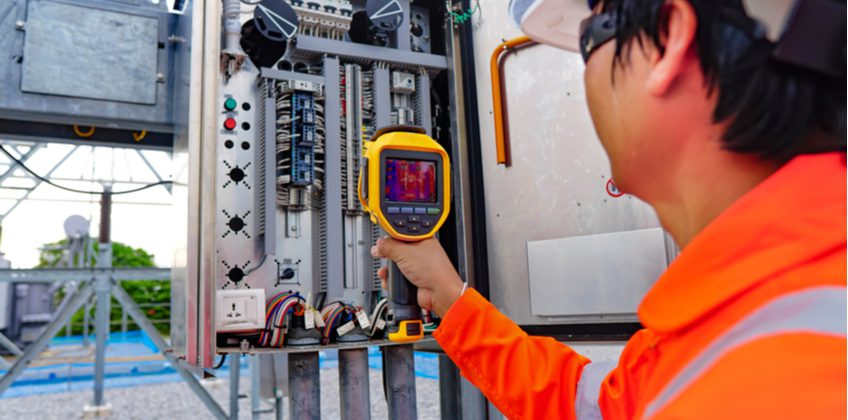
Conditional maintenance is a very effective maintenance strategy but also difficult to implement. This type of preventive maintenance is dependent on monitoring the operation of equipment, goods or machines, and therefore requires the use of adapted and efficient tools.
What is condition-based preventive maintenance?
Conditional maintenance is a form of preventive maintenance that is dependent on the condition of the equipment. It is therefore dependent on experience and is based on information collected in real time, which distinguishes it from systematic preventive maintenance, which is carried out independently of this information.
The European standard defines conditional maintenance as “preventive maintenance based on monitoring the operation of the property and/or significant parameters of this operation integrating the resulting actions” (extract from the NF EN 13306 X 60-319 standard of June 2011). Conditional preventive maintenance is sometimes incorrectly called predictive maintenance.
The parameters measured to carry out conditional maintenance can be, for example :
- temperature and pressure;
- oil level and quality;
- mechanical vibrations;
- electrical voltage and current.
The monitoring of these parameters can be either periodic or continuous.
Manage your maintenance tasks in a mobile CMMS
A simple example of condition-based maintenance
Here is a very simple example of condition-based maintenance: when replacing the brake pads of a car when the indicator light corresponding to this parameter lights up on the dashboard.
Why condition-based maintenance?
Conditional maintenance is the most successful form of maintenance because it is based on The real condition of the machine. It makes it possible to better manage interventions according to the condition of the machine, its wear or its deterioration.
Therefore, it makes it possible to choose the best time to carry out maintenance interventions with the least possible disruption to production. In addition, it avoids programming preventive interventions that are not based on the real state of the machine, which are not always necessary and therefore involve superfluous costs. It is therefore potentially more profitable than systematic preventive maintenance..
How to set up condition-based maintenance?
This type of maintenance can be very effective, provided it is part of a shared collective approach and certain fundamental steps are respected.
The 8 steps to set up conditional maintenance
- Define the critical machines whose breakdowns lead to high production downtime costs or risks for personnel, the environment or non-compliance
- Make a Assessment of breakdowns and degradations known and possible, thanks to the maintenance history
- Establishing a list of observable degradations and determine the tools the most suitable for detecting them
- Search and compare detection equipment available, contact users, test them on site
- Calculate the profitability economical to set up this type of maintenance
- Consider the possible future needs to choose scalable tools
- Choose the good people to manage the monitoring of the equipment concerned (method, versatility, induction spirit...)
- Conduct an annual review for Measuring gains and ensure the profitability of the approach and consider possible improvements.
The choice of tools
Choosing the right tools to implement a condition-based maintenance strategy is essential. They can be divided into 2 categories.
The maintenance management computer tool: CMMS
The use of an efficient CMMS is essential to adopt this type of maintenance. Indeed, when maintenance plans are managed in an Excel file, it is not possible to evaluate the various maintenance scenarios, to plan interventions or budgets or to monitor the execution costs.
CMMS software allows maintenance managers to plan, manage and monitor maintenance interventions to be carried out according to the data reported by the tools for monitoring the operation of the machines.
To be able to effectively collect and analyze this data in order to best plan the necessary interventions, it is necessary to have a next-generation CMMS compatible with technologies such as IoT sensors, very often used for condition-based maintenance. It is also preferable to use an application of Mobile CMMS, in order to facilitate the work of maintenance technicians by allowing them to have access to all the necessary information during their interventions. With this type of solution, they can also complete the intervention reports as soon as it is completed, which promotes the quality of the information.

Follow your conditional maintenance interventions in a mobile CMMS
Tools for monitoring the operation of machines
For a condition-based maintenance strategy to quickly pay for itself, it is important to choose reliable monitoring equipment, as it comes at a certain cost. The tools chosen must also be adapted to the machines on which they will be used. They can be of various types, among which we can mention:
- for vibration analysis : rolling and/or vibration controllers, manifold-controllers, single-channel or two-way analyzer manifolds... ;
- for oil analysis : viscometer, photometric analyzer, particle counter... ;
- for infrared thermography : infrared thermometers, infrared cameras...
The importance of keeping maintenance teams on board
To be effective, the implementation of a condition-based maintenance strategy must absolutely be well understood by production and maintenance managers and receive the support of all personnel involved. The methods must be as standardized as possible between the different sectors.
Again, choosing a good CMMS is therefore important, because if the solution chosen is too complex to use or poorly designed, there is a significant risk that staff will use it infrequently or poorly.
Conditional maintenance therefore has significant advantages for the efficiency and profitability of maintenance. However, it must be implemented in a thoughtful and constructed manner, by carefully selecting the equipment concerned and the hardware and computer tools used.
Any questions?
Contact us to discover the first CMMS that can be deployed in 3 weeks.