Everything you need to know about preventive maintenance


Preventive maintenance, or planned technical maintenance, consists in intervening on equipment at regular intervals or according to predefined criteria. Its primary objective is to reduce the risk of breakdowns on goods, machines and equipment, but it also makes it possible to achieve more general objectives. This is why most factories and businesses seek to develop the proportion of preventive maintenance implemented compared to corrective maintenance.
To implement a preventive maintenance strategy or plan, it is important to master the main aspects and to know what tools can be used. Here you will find all the answers to your questions:
- What is the purpose of preventive maintenance?
- What is the difference between preventive and corrective maintenance?
- What are the different types of preventive maintenance?
- Why a preventive maintenance plan?
- How to create a preventive maintenance plan in a CMMS?
What is the purpose of preventive maintenance?
The primary purpose of preventive maintenance is to limit the risk of malfunctions and reduce the number and frequency of machine failures. Through this objective, we seek to:
- Reduce the frequency of production stoppages;
- Reduce machine downtime for repairs;
- Increase the lifespan of machines and equipment;
- Plan corrective maintenance interventions to achieve them under the best conditions;
- Better manage spare parts stocks;
- Avoid any superfluous consumption of energy, lubricant or consumables;
- Reduce the maintenance budget;
- Improving the working conditions of staff;
- Limiting or even eliminating the causes of serious accidents.
TO READ ALSO6 tips for better preventive maintenance management
What is the difference between preventive and corrective maintenance?
To summarize, we can say that Corrective maintenance solves problems, while preventive maintenance seeks to avoid them. Thus, corrective maintenance, sometimes divided between palliative maintenance and curative maintenance, is carried out when a failure occurs on a machine or equipment. Preventive maintenance, on the other hand, seeks, through checks and routine tasks, to verify that an asset is functioning properly and to identify possible faults in its operation before it breaks down.
What are the different types of preventive maintenance?
There are 3 types of preventive maintenance:
- systematic maintenance;
- conditional maintenance;
- predictive maintenance.
Systematic maintenance
La systematic preventive maintenance is important from a criticality point of view concerning the first stages of degradation on a piece of equipment. With an effective CMMS, it can be carried out at predefined intervals, or according to a criterion of use, without taking into account the conditions of use of the machine. For example: changing a car's timing belt every 150,000 kilometers, or changing a neon light every 7,000 hours of use.
Systematic maintenance requires a solid knowledge of degradation rules, such as the life curve of a ball bearing. It must be carried out reliably, so as to eliminate any other need for additional verification between two interventions or to avoid additional surveillance outside of inspection periods.
This type of maintenance is carried out on equipment that does not require high parts replacement costs. This includes:
- The change of oil, bearings, seals, springs, springs, springs, contacts, resistances, lamps, etc.
- Adjusting belt tension, pressure, potentiometers, etc.
- Control of levels, tightening torque, etc.
The disadvantage of systematic planned maintenance lies in the need to determine the ideal maintenance frequency for parts.S.

The Mobility Work CMMS equipment planner
Conditional maintenance
La conditional preventive maintenance requires the monitoring of the operation of a machine, according to certain parameters (pressure, level, flow, etc.). The results of these controls are planned industrial maintenance operations.
This type of maintenance makes it possible to overcome the disadvantages of systematic maintenance. It does not require additional knowledge, except the comparison of controls with predefined thresholds.
Conditional maintenance can be continues with a permanent record of the parameters measured, or Discontinuous with periodic measurement of these parameters.
Predictive maintenance
Predictive maintenance, also called predictive maintenance, is carried out using estimates following analyses and evaluations of machine parameters.
It's maintenance expensive, that requires sophisticated tools, and applies only to elements with significant criticality from a safety and cost point of view. For example:
- infrared thermography;
- Vibration analyses (global and spectral);
- Oil analysis;
- Non-destructive testing (NDT): ultrasound, penetrant, acoustic emission, eddy current.
In conclusion, the three types of planned maintenance tend to reduce the probability of breakdowns, but do not prevent possible breakdowns between two interventions.
TO READ ALSOHow to plan maintenance interventions in your CMMS
Why a preventive maintenance plan?
The establishment of a maintenance plan is essential to apply the principles of preventive maintenance. Indeed, planning is the key to respecting procedures that make it possible to anticipate and prevent breakdowns.
What is a preventive maintenance plan?
A preventive maintenance plan is a document that brings together the procedures, resources and schedule of maintenance interventions on a piece of equipment or a machine.
A maintenance plan must be developed based on the following 3 criteria:
- the recommendations of the manufacturer of the machine concerned, the follow-up of which is essential in order to enforce the guarantee or quality assurance;
- the regulatory and normative provisions to which certain equipment is subject;
- the observations of users and maintenance technicians during the operation of the machine.
How do I set up a maintenance plan?
For prepare a maintenance plan, it is strongly recommended to follow certain steps:
- determine the scope of intervention;
- select the type or types of preventive maintenance to be applied, and the corresponding interventions;
- draw up a file containing all planned interventions as well as all the information necessary for them to be carried out.
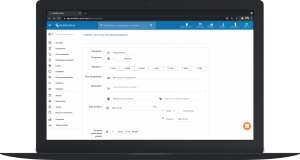
Creation of a maintenance plan in Mobility Work CMMS
How to create a preventive maintenance plan in a CMMS?
In Mobility Work's next-generation CMMS software, creating a calendar maintenance plan, for example, is very easy. All you need to do is:
- select the type of event to create;
- choose the periodicity;
- choose the number of repeats;
- select the equipment (s) concerned;
- select the assigned technicians;
- add keywords, to facilitate the analysis of the maintenance plan and to provide information to users;
- determine the deadline;
- determine the expected downtime of the machine if necessary;
- determine the expected intervention time, in order to warn production managers of the potential duration of machine downtime;
- add the necessary documentation, which will be available for consultation at each operation.
Afterwards, you can easily visualize and manage your maintenance plans in your CMMS.
Do you want to develop preventive maintenance in your company and want to know more in order to increase your productivity and save money? Watch our demo video to help you better manage your maintenance!
Any questions?
Contact us to discover the first CMMS that can be deployed in 3 weeks.