Autonomous maintenance in 6 steps

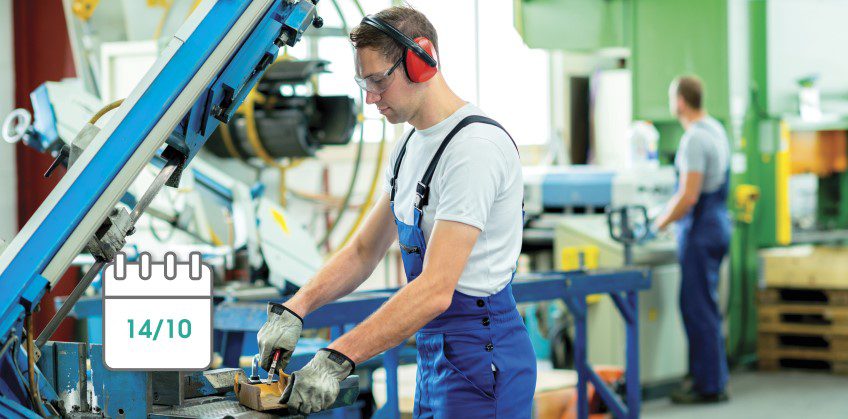
La autonomous maintenance is one of the major contributions of Japanese industry to industrial maintenance. By empowering machine operators and giving them the means to carry out some of the maintenance themselves, it allows significant productivity gains. Today, its implementation is even facilitated by software from GMAO.
Autonomous maintenance, a pillar of TPM
Autonomous maintenance, also called self-maintenance, is one of the constituent elements of TPM (Total Productive Maintenance).
Definition
The term “autonomous maintenance” refers to the carrying out of industrial maintenance tasks by machine or equipment operators, and not by professional maintenance technicians.
Self-maintenance in the history of industrial maintenance
Autonomous maintenance is a component of TPM, developed by Japanese companies that wanted to extend the TQC concept (Total Quality Control). In this way, they wanted to include principles of preventive maintenance and predictive.
The term” Total Productive Maintenance ” covers the following concepts:
- maintenance : devote the time necessary to maintaining the machines (cleaning, repair, greasing);
- Productive : carry out maintenance operations while producing or penalizing production as little as possible;
- Total : involve all teams in maintenance and consider all aspects of maintenance.
This form of maintenance is the result of the activities of production teams respecting So-called “5S” rules, another TPM concept. By applying these rules, these teams realized that they needed to improve the maintenance and operation of their equipment to improve the quality of work.
The goals of autonomous maintenance
The establishment ofself-maintenance meets several objectives:
- increase the availability of machines;
- improve the ownership of the machine by operators;
- reduce maintenance costs;
- limit the risk of accidents.
The implementation steps
The implementation of autonomous maintenance requires proceeding in stages to be successfully carried out successfully and with the active and benevolent participation of production teams.
Initial training or “stage O”
Prior to any action, it is necessary to explain to machine operators the objectives of self-maintenance so that they can appropriate it and be in a position to propose improvements.
It is therefore necessary to respect certain rules that Japanese companies call “5 S”:
- storage and disposal of the useless (Seiri);
- order and method (Seiton);
- inspection and control (Seiso);
- cleanliness (Seiketsu);
- discipline and respect for others (Shitsuke).
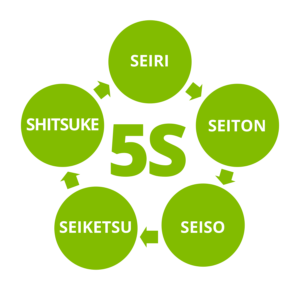
Compliance with these rules depends on the success of the implementation of autonomous maintenance and the optimization of subsequent maintenance operations. This is why the establishment of a follow-up and control of this respect may be necessary.
Inspection and initial cleaning
This first step must be carried out meticulously by all the people involved in the operation of the machines. The aim is to ensure that performance identification is up to date and toeliminate signs of deterioration.
It involves, for example, the detection of leaks, a general check of all attachment points, the repair of faulty elements, the cleaning of tasks, the elimination of electrical faults, etc.
Establishment of corrective measures
Following the initial cleaning, it is important to do everything possible to avoid further deterioration. We will therefore make sure to remove all sources of dirt and waste, but also to prevent projections. In addition, access difficulties will have to be reduced to allow easier cleaning and greasing of the areas concerned.
During this stage, it is useful to develop visual control, for example by placing lights inside the machines or by painting the parts that are not very visible but require regular inspections in light colors.
Develop inspection, cleaning, and lubrication standards
The implementation of such standards is the concrete expression of autonomous maintenance. Already aware of the previous steps, operators will be able to develop their own standards based on existing documentation. They thus define the elements to be inspected, cleaned, lubricated or tightened, as well as the frequency and methods to be respected.
Forming teams
At the same time, it is essential to train operators in autonomous maintenance of their machines. To do this, maintenance technicians and team leaders can provide training for improve skills and knowledge teams of operators and thus develop their autonomy.
At the end of these courses, a good exercise consists in repeating the first step to put it into practice and become aware of the knowledge acquired. Production teams can then set their own goals within the framework of company policy and manage their improvement methods themselves.
Set up autonomous inspections
Thanks to the previous steps, machine operators are now in a position to make their own inspectorates. They will thus be able to perform tasks themselves such as checking oil levels, detecting leaks, tightening fasteners or making mechanical adjustments.
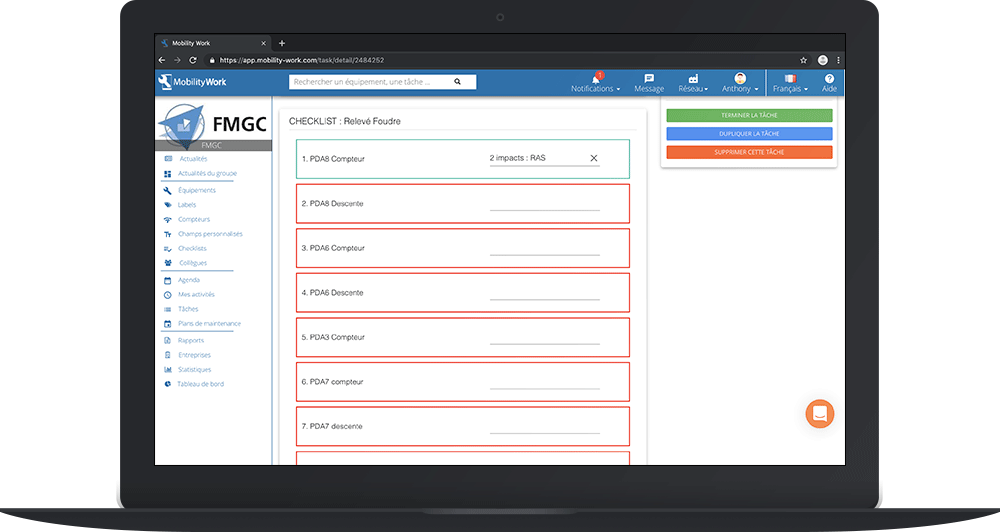
Mobility Work CMMS allows operators and technicians to be autonomous: checklists, task creation, maintenance plans, notifications for each new activity...
Towards fully autonomous industrial maintenance thanks to CMMS?
Theoretically, production teams could, at the end of these steps, manage the maintenance of their machines in total autonomy. However, caution should be maintained on this point. Indeed, despite the standardization and simplification put in place, completely autonomous maintenance is generally only possible in small structures with a limited number of actors.
That is why it is best, at first, to see in this type of maintenance the restoration and the prevention of accelerated deterioration. It is a step-by-step improvement process, rather than a desire to entrust maintenance tasks entirely to production teams.
Larger structures will thus have an interest in maintaining a maintenance supervision by specialized technicians, whose dimensions must be adjusted to the needs. Nonetheless, a CMMS software of the new generation can help them to help them approach the maximum autonomy of operators in this field.
CMMS at the service of autonomous maintenance
Next-generation CMMS tools such as the Mobility Work application facilitate each step of the implementation of autonomous maintenance.
Inspection activities, for example, may be scheduled in the application, according to a defined recurrence. The regularity, precision and traceability of each check is thus guaranteed, and the task of operators is thus simplified.
In addition, the Mobility Work maintenance management platform gives access to a online community which makes it possible to exchange data or maintenance procedures for machines and tools with users around the world. This real social network dedicated to industrial maintenance and CMMS facilitates the search for information and equipment and allows the sharing of experiences beneficial to all users.
Any questions?
Contact us to discover the first CMMS that can be deployed in 3 weeks.