Opt for autonomous maintenance in times of health crisis

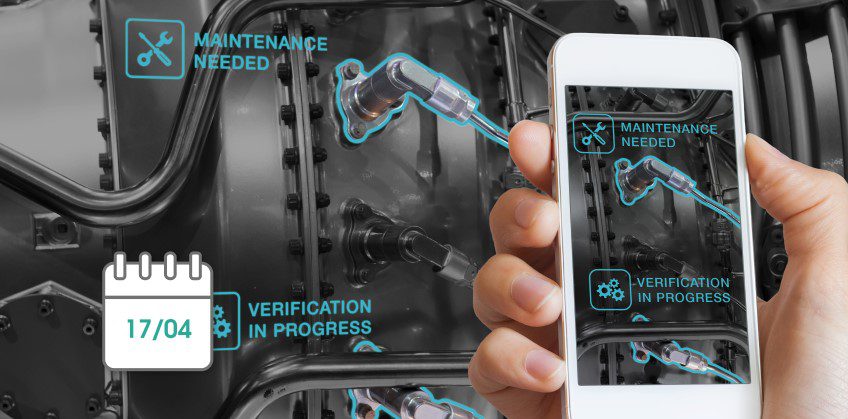
In a period of health crisis, the autonomous maintenance is a particularly useful method. Indeed, factories often operate with reduced staff, and the proper functioning of machines depends on the ability of operators to maintain them themselves.
To develop a industrial maintenance autonomous, it is important to have the right tools. Use a CMMS software The latest generation with advanced functionalities thus makes it possible to give maximum autonomy to the teams who operate the factory in exceptional conditions.
The benefits of autonomous maintenance
Autonomous maintenance is a method developed by Japanese industry to improve industrial maintenance.
Towards the autonomy of machine operators
The expression “autonomous maintenance” refers to a mode of organization that aims to allow machine or equipment operators to carry out industrial maintenance tasks themselves, rather than involving specialized technicians.
Thus, by empowering them and giving them the means to manage the maintenance of the machines on which they work themselves, businesses gain significantly in productivity.
What is autonomous maintenance?
Also called” self-maintenance ”, autonomous maintenance is part of the concept of TPM (Total Productive Maintenance) developed by Japanese companies, who wanted to extend the principle of TQC (Total Quality Control). In particular, they wanted to include principles of preventive and predictive maintenance.
TPM refers above all, of course, to maintenance actions: devoting the time necessary to maintain machines (repair, cleaning, lubrication, etc.). To make it productive, TPM aims to carry out maintenance operations while continuing production, or by penalizing it as little as possible. Finally, the term “total” underlines the desire toinvolve all teams in the maintenance of equipment and to consider all aspects of it.
The principle of self-maintenance emerged when production teams started to apply 5S rules, another TPM concept. These teams then realized that, in order to improve the quality of their work, they needed to improve the maintenance and operation of their equipment.
Why introduce autonomous maintenance?
In normal times, the implementation of autonomous maintenance meets the following objectives:
- promote the ownership of machines by operators;
- increase the availability of equipment;
- reduce maintenance costs;
- reduce the risk of accidents.
The advantages of autonomous maintenance in times of health crisis
In a period of health crisis and confinement like the one we are currently experiencing, autonomous industrial maintenance has the great advantage of allowing small production teams to carry out a large part of the machine maintenance tasks themselves, without calling on maintenance technicians.
Thus, factories are in a position to continue their activity using a limited number of employees. Whether by choice (limitation of health risks) or by constraint (work stoppages due to illness or childcare, right of withdrawal, etc.), many companies cannot in fact rely on their usual workforce. Les autonomous maintenance methods allow factories to continue to produce, while ensuring the proper functioning of the machines through regular and quality maintenance.
How to set up autonomous industrial maintenance?
To set up principles of autonomous maintenance within a factory, certain steps must be respected, even when there is an emergency. In a factory that is in good working condition, this process is in principle quite fast.
The “5S”
The first step corresponds to the establishment of certain rules, often called “5S”. In summary, these aim to eliminate all that is unnecessary and to promote efficient storage, to apply order and method within the factory, to impose inspection and control procedures, to promote the cleanliness of equipment, and to establish collective discipline and respect. Compliance with these main rules is essential for the effectiveness of autonomous maintenance.
Inspection and cleaning
The second step therefore consists, logically, in carrying out an inspection and cleaning of all the machines by all the operators involved in their operation. The timely mobilization of as many staff as possible will be beneficial to the success and speed of this stage.
Read also: Autonomous maintenance in 6 steps
Prevent deterioration
Then, corrective measures will be implemented in order to avoid future deterioration of the equipment: eliminate sources of dirt and waste, prevent projections, facilitate access and lighting to the areas to be cleaned, etc.
Establishing standards
Inspection, cleaning and lubrication standards must then be put in place. It is during this phase that the real autonomy of the production teams is put in place. Building on the previous steps, they develop their own standards based on existing documentation and practices, and define what to inspect and maintain, and the frequency and methods to be followed.
Train or support teams
The last stage corresponds to the training, when possible, of production teams by maintenance teams, in order to improve their skills. In times of health crisis, this training can possibly be carried out remotely and take the form of support by a maintenance manager.
At the end of these various phases, maintenance operators are in a position to carry out the inspection of the machines themselves and to perform a large part of the current maintenance tasks.
Develop autonomous and preventive maintenance thanks to CMMS
The development of new technologies has encouraged the appearance ofCMMS tools which, thanks to their ergonomics and mobility, allow production operators to achieve much greater autonomy in maintaining the machines on which they work.
Choosing a mobile CMMS software for maximum autonomy
In practice, the management in total autonomy of industrial maintenance by production teams is a theoretical objective more than a concrete goal. To get as close as possible to it, the adoption of a CMMS software mobile will be very useful. In fact, a mobile CMMS tool has three characteristics that are particularly favorable to autonomous maintenance.
Facilitated communication
On the one hand, an application like Mobility Work integrates a chat and discussion spaces based on a community basis. Communication between the various people involved in maintaining the equipment is therefore extremely simple, even when they are not physically in the same place.

Simplified use
On the other hand, it was designed on the model of everyday applications, which almost all of us now use on a daily basis. La getting started and using this software is therefore very easy, including by teams that have no particular computer skills.
Total mobility
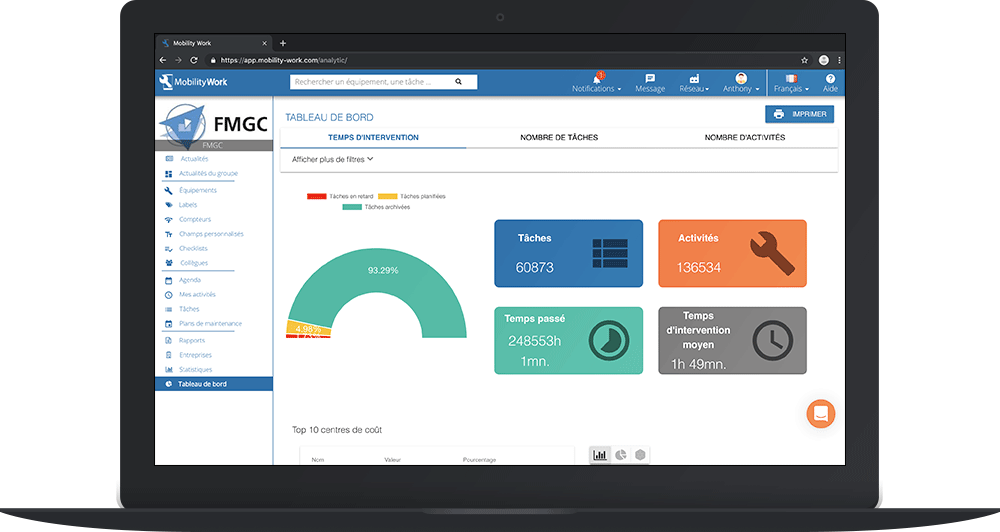
Finally, the Mobility Work application is available on PC as well as on mobile. This means that it can be used from any device connected to the Internet, whether it is a smartphone, a tablet or a personal computer. It can therefore be used by machine operators during regular inspections, to help them carry out these inspections according to established procedures and to allow them to fill in the necessary information. But it can also be used by maintenance managers, even if they are working from home, to monitor maintenance indicators and ensure the proper functioning of the machines.
Managing preventive and remote maintenance thanks to IoT
Thanks to IoT (Internet of Things, or Internet of Things), the Latest generation CMMS makes it possible to monitor the status and operation of the machines from anywhere. Sensors located on each piece of equipment and connected to the Mobility Work application make it possible to remotely consult the main maintenance indicators, without the need to carry out an on-site inspection.
These sensors also make it possible to develop preventive maintenance. Numerous machine malfunctions can thus be anticipated, in order to avoid any negative impact on production. In addition, possible interventions by maintenance technicians for complicated maintenance tasks can be anticipated and planned in compliance with the health regulations imposed by the current crisis.
In normal times, the autonomous maintenance represents a breakthrough for factories, especially in terms of productivity. In times of health crisis, it is becoming almost indispensable for many production sites that must operate with reduced staff. Thanks to the Next generation CMMS, production operators can carry out most maintenance tasks themselves, being assisted remotely, if necessary, by maintenance managers. As for the latter, they benefit from new preventive maintenance capabilities.
Any questions?
Contact us to discover the first CMMS that can be deployed in 3 weeks.