How big data impacts new technologies

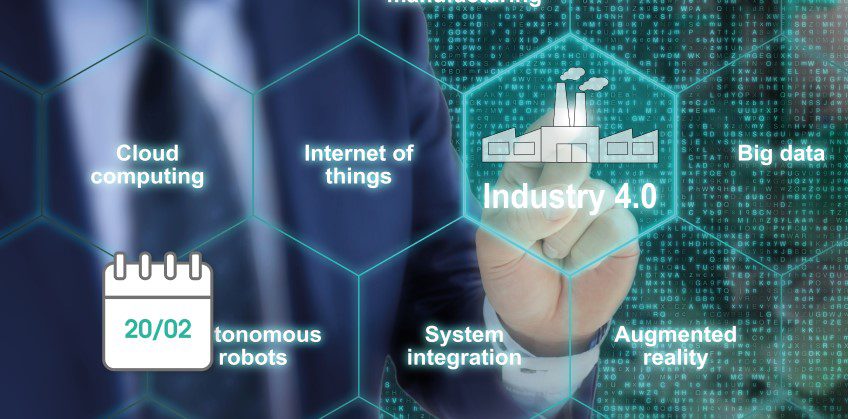
Big Data is more than just a trendy concept, including maintenance. While lauded by tech companies and hobbyists for years, bulk data aggregation is now revolutionizing technology, design, and deployment.
The concept has made its way into the electrical, integrated circuit, or manufacturing industries and has influenced how we design, how we relate to others, how we play, and much more.
This article is an opportunity to see that Big Data is about to revolutionize the next technologies, that it is evolving and that, as we have always been told, it has very real advantages.
Revitalize industrial maintenance thanks to Big Data
Let's start with the most obvious field of application: The factories.
One of the essential elements of any manufacturing process is to ensure that machines and components are in excellent condition, which inexorably means that maintenance represents an important part of the total industrial budget. Therefore, any means are good to reduce these costs even if, until recently, there were few solutions in this sense.
Big Data is a good opportunity to remedy this, especially if it is combined with CMMS software (computer-aided maintenance management solutions). These allow factory managers to rely on automated and data-centric systems to monitor the condition of machines, or even set up a predictive maintenance.
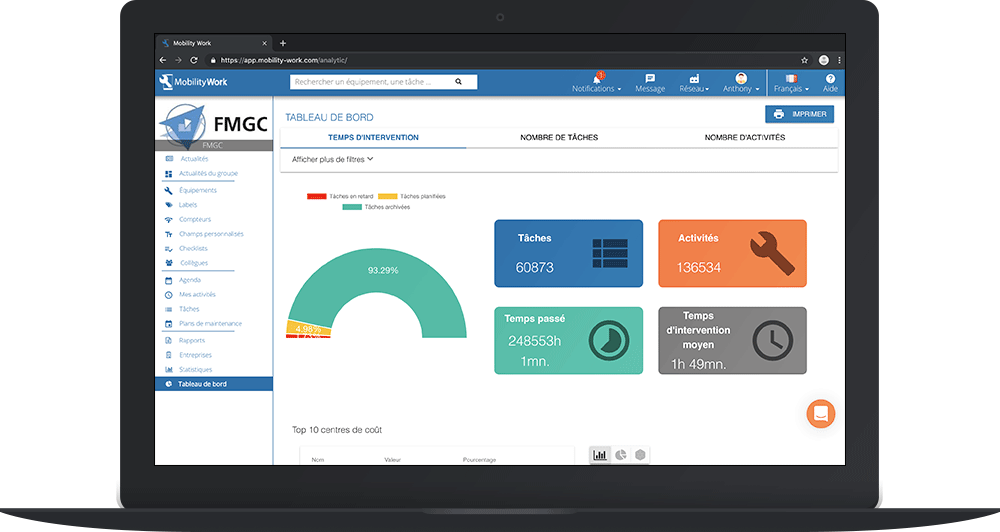
Thanks to them, it becomes possible to detect malfunctions long before they have any consequences and to schedule maintenance with a fairly new degree of precision. These software have other unprecedented advantages, as they give teams the ability toexchange information on suppliers, good maintenance practices or even organization methods. In short, Big Data could well revolutionize the way we produce, with the consequence of boosting business profits.
TO READ ALSOEverything you need to know about Industry 4.0
How to make VPNs and data systems coexist
Big Data has undeniable consequences on how we protect ourselves against digital threats, which is ultimately nothing surprising. For example, many of us use antivirus and other antimalware that aggregates user data from around the world, allowing us to fundamentally become aware of these threats and identify them when they appear.
However, and even if the implications are similar, the role of Big Data in VPN technology is much less well known. Moreover, these two elements are not natural allies. Many use VPNs to prevent third parties from identifying them and tracking their online movements, which limits the potential retrieval of data on our browsing habits, a significant part of the data market.
Under these conditions, what would be the solution? This question is not easy to answer, but VPN publishers themselves have as much interest in promoting Big Data as in ensuring the anonymity of Internet users. They can rely on data analysis to preserve their areas of action, manage data flows and sell their services. The operators themselves recognize this: allowing, to a certain degree, data recovery can be very beneficial to society in general.
One could therefore imagine a compromise that would involve some advanced VPNs allowing their customers to choose between different levels of protection of their data (thus allowing a certain degree of recovery), while others would leave no room for data collection. In any case, we can be sure that these same VPNs will increasingly use Big Data to improve their encryption, server routing, and authentication.
In pursuit of a revolution in the medical sector
Looking at a very different part of our economy now, big data has a huge impact on how care is delivered. These upheavals are leading to changes in the technologies used by drug manufacturers and health professionals.
Massive data collection, for example, has allowed genetic researchers to retrieve huge amounts of genome sequences. Thanks to the millions of entries obtained from subjects around the world, these researchers were able to innovate in terms of individualized medical interventions. Coupled with AI (artificial intelligence) and bioinformatics tools, the data collected is revolutionizing the way we create new treatments.
The same goes for patient follow-up. By monitoring each subject, researchers can gain comprehensive information about the origins of diseases, how patients use medications, and how best to treat them. In recent years, the new forms of sensors and applications that have emerged have significantly improved the knowledge of professionals in the sector.
Logistics: connecting point A to point B thanks to Data
With the advent of Big Data, the sector of freight transport is also undergoing profound transformations and is exploring new ways to become more efficient.
In the field of logistics, it is data analysis that could be improved. Thanks to the cutting-edge analysis tools used by the sector, manufacturers model resource flows accurately. They can identify bottlenecks in their production chains, understand where they are losing money, etc.
Shipping and road transport companies use big data to ensure that each truck or boat leaves with the optimal load, save fuel, avoid excessive maintenance expenses and reduce greenhouse gas emissions. The sensors, connected to the Internet of Things (IoT - Internet of Things), send real-time data on fuel levels, engine performance, the condition of a boat's hull: so many metrics that make it possible toavoid accidents, which ensure a certain longevity of vehicles and are essential for limit logistics expenses.
These advantages are also being felt on the side consumers. Delivery companies, for example, rely on this data to optimize the”Last mile” and ensure that vehicles are available as soon as needed. Businesses can use data feeds from delivery staff to understand how their time is being used to eventually provide them with advice on where to park, which streets are accessible or not, when to break, and where to go. In this context, the biggest advance is probably Optimization of these, which would help reduce the stress experienced by delivery people and offer better service to customers.
The movement of people and resources is becoming more and more rapid, efficient and optimized. The impact of Big Data has a lot to do with it, and it's only the beginning.
Any questions?
Contact us to discover the first CMMS that can be deployed in 3 weeks.