The combination of BIM and CMMS: the future of maintenance?

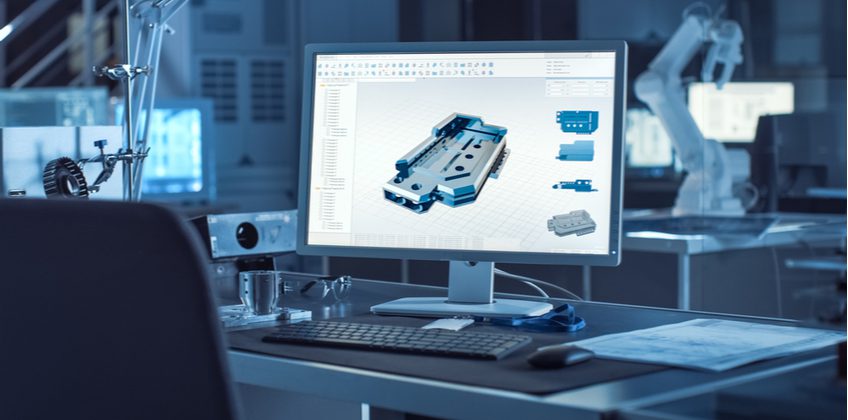
Among the numerous applications of new technologies emerged in recent years, the combination of BIM and CMMS is one of the most promising for maintenance in general and Facility Management in particular.
To make this great potential available to their customers and users, Mobility Work and its partner RS Components have joined forces to create the ecosystem essential for the successful integration of BIM into CMMS. Managers and maintenance managers can therefore already now have a single source of information to further optimize the maintenance of their equipment.
Definition of BIM
The term BIM stands for Building Information Modeling, the term “building” here being able to refer to any infrastructure and any real estate asset.
There is no precise definition of BIM shared by all: it is mainly about working methods based on a 3D digital and parametric model containing intelligent and structured data. These methods allow the sharing of reliable information about equipment or infrastructure throughout its lifespan, from design to demolition. The digital model consists of a digital representation of the physical and functional characteristics of the equipment, building or infrastructure.
What is BIM for?
BIM makes it easier and more effective to structure, share and analyze information. Thanks to modeling, the representation of data in 3D simplifies the visualization of the various elements of a building, equipment or machine: electrical networks, pipes, transmissions... Digitization therefore allows both to simplify the stages of construction and maintenance of a building or equipment And ofobtain a complete and detailed virtual vision of the elements that make up a structure.
In addition, modeling facilitates communication between the various actors in construction and maintenance: the structured digital model in fact allows a better collaboration between all stakeholders, either by exchanging data, or by making it possible to intervene on a single model.
Often seen as a tool primarily for the design and construction of real estate, BIM is also very useful in optimizing the management of these assets - therefore maintenance - but also of any infrastructure and equipment composed of several elements.
BIM and CMMS, how do they work?
By grouping existing information and technical trees on equipment or a building, a modern CMMS can, thanks to BIM, activate a 3D module that allows all this information to be cross-referenced and presented in an interactive visualization mode.
In the long term, it will even be possible to interface the technical management of the building, for example to fill in measurements in real time or even remotely take control of certain equipment.
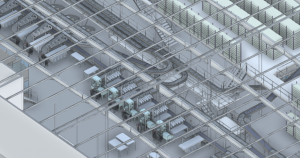
Easily locate and analyze your equipment thanks to BIM integrated into the CMMS
With the combination of BIM and CMMS, all the technical and functional characteristics of a building are transcribed within the same system, which allows:
- of facilitate data transfer concerning the building or equipment from the manufacturer to the operator;
- Ofhelp maintenance operators to locate each piece of equipment through 3D visualization and to quickly access technical data sheets;
- to transmit to the owner in real time information concerning themaintenance of its assets.
The concrete advantages of combining BIM and CMMS for facility management
In general, the possibility of using BIM in a CMMS helps companies to meet two major challenges: TCO (Total Cost of Ownership or total cost of an asset throughout its life cycle) and the CSR (Corporate social responsibility).
The combination of BIM and GMAO makes it possible to build a considerable knowledge base for the management of the maintenance of buildings and equipment while facilitating their sharing between all those involved in the maintenance of buildings and equipment. By integrating the IoT technology (connected objects), data collection is further enriched and simplified, making maintenance and decision-making even more accurate and easy. Information such as the energy consumption of each piece of equipment, for example, is transmitted and analyzed in real time.

The counter analytics of a new generation CMMS
For maintenance and facility managers, the integration of BIM data into a CMMS allows to analyze, organize and manage interventions more effectively. The contribution of BIM is particularly valuable when there are multiple maintenance workers, in particular when some are external to the company and are not familiar with the location. Thanks to the 3D digital model, they can thus find much more easily and without the risk of error the location of the elements on which they must intervene and access their technical characteristics (flow, volume, structure, etc.). The responsiveness and quality of interventions are therefore significantly improved thanks to the quality of information and its sharing.
Finally, the possibility of accessing a BIM view in a CMMS makes it possible to reduce the frequency of manual surveys in risk areas, which significantly improves the safety of maintenance technicians and, in some cases, their exposure to toxic substances.
How to combine BIM and CMMS?
The integration of BIM into CMMS is only possible through solid and innovative partnerships, like the one that unites Mobility Work with RS Components. This partnership is one of the components of a connected ecosystem totally dedicated to maintenance.
Companies that wish to benefit from the combination of BIM and CMMS can therefore contact with RS Components or with Mobility Work to benefit from the very latest innovations in the field.
Any questions?
Contact us to discover the first CMMS that can be deployed in 3 weeks.