Basic electrical formulas: fundamentals and improvement of your routines

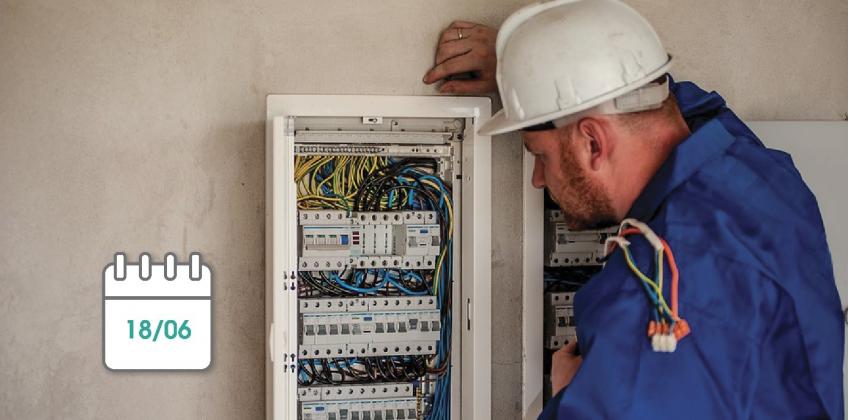
Electrical maintenance formulas
The maintenance of electrical equipment is of crucial importance in the context of a industrial maintenance routine successful, because it guarantees the safety of the factory. Emergency and emergency generator failures, for example, have their origins in completely trivial causes, such as fuel filter clogging, which can be effectively avoided through targeted maintenance procedures.
A well-established industrial maintenance program is inseparable from solid electrical maintenance
Electrical problems can happen anytime and anywhere in the factory. Therefore, predictive maintenance routines, which include testing, monitoring, monitoring, repairing, and replacing uninterruptible power supplies, batteries, and generators, are highly recommended. Electrical maintenance also includes proactive management and comprehensive reporting of hydraulics, pneumatics, electrical machines, etc. Maintaining all the company's electrical systems at their maximum energy efficiency ensures a uniform distribution of electrical energy and guarantees the electrical reliability of the organization.
The establishment of an electrical maintenance routine is essential as part of a reliable industrial maintenance program, and ensures electrical safety in the workplace as well as the continuity of production.
Importance of electrical maintenance
For all company software (ERP, GMAO, sensors, Big Data solutions, machines managed by computer software), electrical maintenance is of paramount importance. A shortage of electricity or even the failure of a single switch in the electrical system can cause considerable downtime, data loss and block the proper functioning of an installation for several days.
Adequate maintenance management, guided and controlled by an effective CMMS solution, ensures optimal performance of expensive and critical assets such as electrical control and distribution systems. Very often, businesses invest a lot of time and effort in managing and maintaining mechanical assets, without considering electrical equipment: missing spare parts in the store, unplanned shutdowns, and only a few scheduled electrical tasks. In reality, asset condition monitoring should apply the same way to all company systems in order to provide the most reliable and available equipment possible.
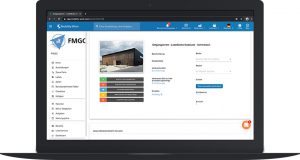
Access all documents (photos, videos, etc.) and checklists from the equipment sheet in your Mobility Work application
Mobility Work, the next-generation maintenance management platform, supports companies in setting up and deploying an effective maintenance routine to manage their mechanical and electrical equipment.
How to set up an effective electrical maintenance routine
- Adopt techniques for monitoring the condition of equipment
Tools for monitoring the condition of equipment, such as thermal imaging, for example, make it possible to detect problems with electrical connection points and equipment operation.
- Establish predictive and preventive maintenance routines
Early identification and prevention of problems are essential in electrical maintenance. Regular preventive checks and the analysis of sensor data extracted in order to generate predictive algorithms can easily detect and solve potential problems before they turn into failures.
- Use a new generation CMMS
A modern CMMS offers the possibility of connecting to all company systems by storing and processing data, and makes it possible to manage targeted maintenance interventions. CMMS solutions such as Mobility Work are flexible and adaptable to all types of industries and assets. Combining a new generation CMMS, the first social network for maintenance and a marketplace open to suppliers and service providers, the new generation maintenance management platform Mobility Work offers unique opportunities to business leaders.
- Use the PIEU method to prioritize business assets
Defining the criticality of your assets will help you prevent bottlenecks
- Calculate the exact performance parameters of your equipment for the most accurate measurements
Using basic electrical formulas can allow you to significantly improve your daily maintenance routines.
Finally, there is no more accurate method for calculating the distribution of energy. The main formulas are listed below:
Calculation formulas:
- Capacitor:
Charge Q (coulomb) = Capacity C (farad) * voltage U (volt)
Parallel coupling: C = C1 + C2 + C3
Serial coupling: 1/C=1/C1+1/C2+1/C3
The measuring device is a capacimeter.
- Current strength:
The ampere is the strength of a constant current that carries 1 coulomb per second.
1 ampere hour = 3600 coulombs
Intensity I (ampere) = Charge Q (coulomb)/Time T (seconds)
The measuring device is an ammeter.
- Power absorbed by a receiver:
Power P (watt) = Voltage U (volt) * Intensity I (amp)
The measuring device is a wattmeter.
- Ohm's law (formula for passive conductors):
Voltage U (volt) = Resistance R (ohm) * Intensity I (amp)
The measuring device is a voltmeter.
- Resistance:
Serial coupling: R = R1 + R2 + R3
Parallel coupling: 1/R = 1/R1 + 1/R2 + 1/R3 T
The measuring device is an ohmmeter.
- Generator:
Voltage U (volt) = Electromotive force at no load E (volt) — Resistance R (ohm) * Intensity I (ampere)
The measuring device is a voltmeter.
- Receiver:
Voltage U (volt) = Counter-electromotive force E' (volt) + Resistance R (ohm) * Intensity I (ampere)
The measuring device is a voltmeter.
- Joule effect:
W: calorific energy
Power W (watt) = Resistance R (ohm) * Intensity I² (ampere squared) * Time t (second)
P: Calorific power
Power P (watt) = Resistance R (ohm) * Intensity I² (ampere squared)
P = U * I = U²/R
The measuring device is a wattmeter.
- Current pulse:
Pulse ohm (radian/second) = 2 * pi * Frequency F (hertz)
- Frequency:
Frequency f (hertz) = 1/Period T (second)
The measuring device is a frequency meter.
- Active power:
Active power P (watt) = voltage U (volt) * Intensity I (Ampere) * Power factor Cos Phi
The measuring device is a wattmeter.
- Reactive power:
Reactive power Q (VAR) = voltage U (volt) * Intensity I (amp) * Sin Phi
The measuring device is a varometer.
- Apparent power:
Apparent power S (VA) = voltage U (volt) * Intensity I (ampere)
The measuring device is a phi-meter.
- Impedance:
In alternating current, Z is different from R.
Voltage U (volt) = Impedance Z (ohm) * Intensity I (amp)
- Pure resistive circuit:
In alternating current, Z is equal to R
Voltage U (volt) = Resistance (Ohm) * Intensity I (amp)
- Work energy:
Displacement at an angle to the force:
Work W (joule) = Force F (newton) * Displacement D (meter) * Cos Phi Angles
- Work during a rotation:
Work W (joule) = Torque N (newton.meters) * Rotation Phi (radian)
- Moment of a force in relation to its axis of rotation:
Torque M (newton.meters) = Force F (newton) * Radius R (meter) = Force F (newton)
The measuring device is a torque meter.
- Power:
Power P (watt) = Work W (Joule)/Time T (second)
Work P (watt) = torque M (newton.meter) * ohm (radian/second)
- Speed:
Linear speed = speed v (meters/second) = Length L (meter)/Time T (second)
The measuring device is a tachometer.
Angular speed = Speed ohm (radian/second) = 2p-N /60
- Energy:
Kinetic energy (joule) = * Mass M (kg) * Speed V² (meter/sec²)
Potential energy = Energy Ep (joule) = mass M (kg) * acceleration g (m/sec²) * height h (meter)
- Turning moment:
Depends on the mode of transmission of the driven masses:
Moment of gyration MD² (kg.square meter) = 4 * moment of inertia J (kg.square meter)
- Pressure
Pressure P (pascal) = Force F (newton)/Section (square meter)
The measuring device is a pressure gauge.
- Flow rate:
Flow Q (cubic meter/second) = Volume V (cubic meter)/time (second)
Flow Q (cubic meter/second) = Volume V (cubic meter) * Rotation frequency N (rpm/second)
The measuring device is a flow meter.
- Power:
Power P (watt) = Pressure P (pascal) * Flow Q (cubic meter/sec)
Setting up an effective maintenance routine helps avoid significant financial losses caused by unexpected breakdowns. Basic electrical formulas play an essential role in carrying out the daily maintenance tasks of electrical equipment and energy distribution systems. A global maintenance strategy must therefore include all the mechanical and electrical equipment in a factory in order to ensure its safety and reliability.
Are you interested in maintenance management and want to know more in order to increase your productivity and save money? Schedule a free video with our team to help you better manage your maintenance!
Any questions?
Contact us to discover the first CMMS that can be deployed in 3 weeks.