TPM and industrial maintenance: definition and examples

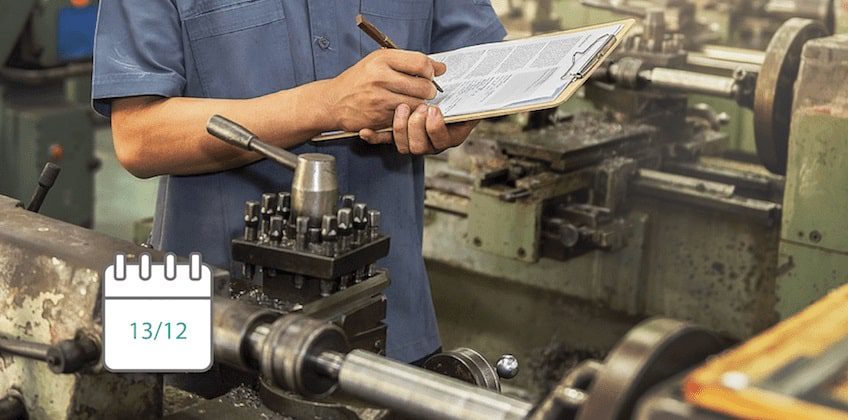
One of the objectives of TPM (Total Productive Maintenance) is to instill a sense of shared responsibility for equipment, by giving maintenance operators the means to guarantee the optimal working condition of the machines. What is called self-maintenance can help you significantly improve your productivity by increasing uptime, reducing production cycle times, and resolving faults immediately. Integrate the TPM concept into your strategy for the continuous improvement of your industrial maintenance can only be beneficial for your organization.
What is total productive maintenance?
The total productive maintenance approach originally came to us from Japan and was quickly promoted and spread by the Japan Institute of Plant Maintenance. Nippondenso was the first Japanese manufacturer of automotive components to use TPM as early as 1961. Quickly, Toyota and other Japanese manufacturers deployed this approach within their organizations.
Like many other maintenance strategies, TPM aims to achieve a continuous production cycle, without downtime, by maintaining and improving the integrity of production and quality systems.
The 5s and the 8 pillars of TPM
Through its 5S concept and its 8 pillar activities, total productive maintenance has a major influence on the quality of industrial maintenance, on the improvement of production techniques, on the cleanliness and order within the factory, as well as on the skills and the level of training of maintenance professionals. The 5S and the 8 pillar activities of TPM respond to two prerogatives: define objectives in order to maximize the efficiency of equipment and bring together the various departments of the organization around issues related to planning, production, production, quality and maintenance. Employees are at the heart of this system and are continuously trained in lean manufacturing techniques by identifying and removing waste. In the context of industrial maintenance, this means the disappearance of downtime, production interruptions, faults and incidents.
What are the 5S of Total Productive Maintenance?
In short, the 5S methodology simply aims to eliminate unnecessary elements and to organize the remaining ones as best as possible by encouraging behaviors favorable to the organization of the place of production. The implementation of this concept is essential for safety, quality, efficiency and the pace of production. Each of the 5S echoes a Japanese term that describes the different steps in the process of organizing the production site.
1. Seiri (Trier)
The first S invites you to eliminate anything that is not absolutely necessary in your workplace, such as unnecessary materials or equipment.
2. Seiton (Sort, order)
The objective of the second S is to organize the remaining items in order to define and maintain clean locations for tools, machines, and materials.
3. Seiso (Clean, dust off)
The third S refers to implementing regular cleaning practices by dividing the manufacturing area into different cleaning areas and assigning a responsible team to each area.
4. Seiketsu (Standardize)
The fourth S focuses on creating standards for the execution of the three activities mentioned above.
5. Shitsuke (Formalize)
The aim of the fifth S is to ensure the sustainability of the system by ensuring that all standards are rigorously enforced.
Successful 5S implementation will result in a clean, well-organized work environment where tools are easier to find and where emerging issues such as leaks, cracks, and spills can be detected immediately.
What are the 8 pillars of Total Productive Maintenance?
The 8 pillars of a total productive maintenance program allow organizations to achieve increased machine utilization and productivity goals.
1. Improvement on a case-by-case basis
During this activity, teams identify issues related to equipment failures and define improvement goals as part of what is known as kaizen. The most important step is to ensure that cross-functional teams work together to find the root causes of problems and implement solutions for continuous improvement.
2. Autonomous maintenance
The second activity is characterized by an operation of autonomous maintenance where operators of given machines are responsible for adjustments and minor maintenance of the machines (for example: cleaning, lubrication, and inspections). The result of this activity is more motivated and more competent employees, a better understanding of the goals of a fashionable organization. Lean and a reduction in costs thanks to the increased reliability of the equipment, which has been continuously checked and maintained.
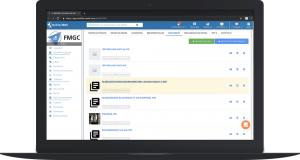
Access all documents (photos, videos, etc.) and checklists from the equipment sheet in your Mobility Work application.
3. Scheduled maintenance
Planned maintenance includes preventive and predictive maintenance routines based on the supervision of the condition of the equipment, on the maintenance history as well as on the data collected by the sensors. Planned maintenance makes it possible to anticipate major breakdowns, to reduce unplanned downtime and therefore to increase the capacity of the production activity.

The calendar feature offered by Mobility Work allows you to plan all your preventive and predictive maintenance interventions.
4. Improvement of knowledge and skills
This activity focuses on the continuous improvement of employee skills by initiating training and coaching programs. For example, machine operators develop autonomous maintenance skills, maintenance professionals learn preventive, predictive, and prescriptive maintenance techniques, and managers are trained in improvement strategies such as Kaizen and Total Productive Maintenance.
5. Preliminary maintenance of equipment
This pillar concerns the design phase of equipment and aims to create a machine in such a way that it is easy to use and maintain. This includes taking into account issues such as ease of cleaning, lubrication and inspection, accessibility of machine parts and ergonomics. This allows new equipment to reach the desired performance levels more quickly.
6. Quality maintenance
This activity ensures that the equipment is able to detect and prevent errors during production. By using lean manufacturing tools such as automation (Jidoka) and Andon, machines can detect and report any abnormal condition by targeting the elimination of the root causes of faults.
7. Total productive maintenance in offices
This pillar deals with the use of TPM principles in administration to improve, for example, order processing, procurement, and planning procedures. The main idea here too remains the elimination of “waste” by improving administrative operations.
8. Safety, Health and Environment
The final pillar of Total Productive Maintenance is the creation of standards concerning the working conditions of employees, while eliminating potential risks to their health and safety. This concerns, for example, the implementation of measures (such as the wearing of protections or work standards) that make the use of machines safer.
Why opt for Total Productive Maintenance?
The implementation of 5S and associated pillars depends on the size, needs, processes, and culture of your business. However, regardless of your goals, you will certainly be able to make the most of the best practices of Total Productive Maintenance. Here are some of the most important ones:
- Cost reduction
- Optimization of employee work schedules
- Increased workforce efficiency
- Safety and cleanliness of the production site
- Equipment reliability
- Reduction in delays, breakdowns and production stoppages
Take advantage of TPM with Mobility Work
In order to be carried out successfully, your Total Productive Maintenance program requires constant control. A next-generation CMMS (computer-aided maintenance management software) allows you to streamline your daily maintenance routines by ensuring that all technicians are in the right place at the right time. Preventive maintenance plans, supervision and maintenance history: data is stored and accessible at any time on all your devices via your GMAO mobile application. In the event of anomalies, they can be easily identified and dealt with thanks to notifications sent to the responsible team. Thus, all problems are resolved before they turn into real breakdowns.
The main objective of Mobility Work CMMS is to facilitate the involvement of each employee concerned with daily maintenance routines. This is why our application is easy to use and flexible, and offers a wide range of functionalities, adaptable according to the needs of organizations. One of our team's guidelines when creating Mobility Work was to offer a product whose environment would enhance employee motivation.
Are you interested in maintenance management and want to know more in order to increase your productivity and save money? Watch our demo video to help you better manage your maintenance!
Any questions?
Contact us to discover the first CMMS that can be deployed in 3 weeks.