Maintenance: how to improve safety thanks to a CMMS

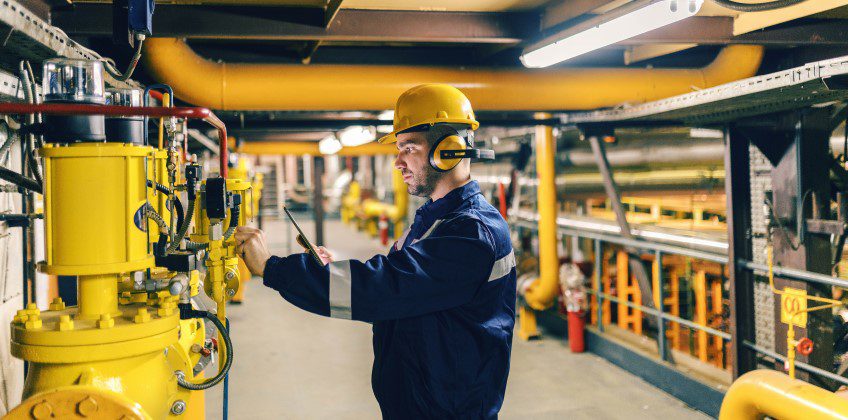
Safety is a major issue in maintenance activities, especially in the industrial sector. Effective occupational risk management makes it possible to greatly improve the safety of maintenance technicians and all personnel involved in the maintenance of equipment and machines.
As maintenance is increasingly outsourced, the procedures and tools at the service of risk management must adapt and make it possible to guarantee optimal safety for the personnel involved. The use of a mobile and efficient CMMS represents a major asset in achieving this objective.
Why use a CMMS to improve maintenance safety?
Choosing a good GMAO makes it possible to facilitate risk management and improve the safety of maintenance technicians in several ways, because it makes it possible to:
- centralize information related to equipment;
- improving internal communication;
- manage the maintenance schedule more easily;
- better comply with safety standards;
- improve prevention.
Safety and risk management in maintenance
Maintenance is a field in which the management of risks, whether they concern personnel or machines, is an essential parameter to take into account.
Technician maintenance and safety
The issue of employee safety and risk management is closely linked to maintenance jobs. According to AFIM figures (French Association of Engineers and Maintenance Managers), the occurrence of serious accidents is thus 3 times higher in maintenance professions compared to the national average.
Maintenance technicians are even more exposed to risks than production personnel, in particular because the possible causes of accidents are more numerous and diverse.
The existence of greater risks in maintenance is due to the very nature of the interventions carried out, which:
- are not always repetitive, and are therefore subject to hazards and unusual situations;
- are often performed on equipment that is in operation;
- are exposed to contact with bare parts under tension or with fluids under pressure;
- are often subject to severe time constraints, especially when the equipment concerned is crucial for production;
- regularly take place at night, or in poorly lit or cramped spaces;
- are accompanied by a high mental load when carried out on complex industrial systems;
- are carried out on elements or machines whose access, dismantling and reassembly are often difficult to access, dismantle and reassemble, and which can be heavy to handle.
The impact of new forms of organization on maintenance safety
In addition, maintenance interventions are more and more often outsourced : subcontracting on site, application of manufacturer warranty, one-off services, etc. Different personnel, with varied statuses, may therefore be required to intervene simultaneously or successively on the same equipment or within the same company, while being likely to have to communicate.
These new forms of organization have important consequences on the safety of maintenance technicians and on occupational risks to which they are exposed:
- maintenance personnel have not always received optimal information and preparation;
- monitoring and coordination of interventions may be inadequate;
- the good knowledge of the condition of the equipment or its history may be insufficiently maintained;
- interventions can be carried out in situations of “co-activity” with production personnel, or between maintenance technicians from different companies;
- emergency repairs may be carried out by insufficiently competent internal technicians due to the lack of external personnel available.
Risk management is therefore becoming increasingly important in the management of maintenance and the teams responsible for it.
How to improve the safety of maintenance technicians
To improve the safety of maintenance personnel, there are 3 essential recommendations:
- adapt risk management to the type of maintenance applied;
- promote the best possible communication between all stakeholders;
- put in place a prevention plan.
Adapt risk management to the type of maintenance
Risk prevention and management cannot be the same depending on whether curative maintenance is applied or preventive maintenance is applied.
The interventions of curative maintenance or palliative (diagnosis of a machine failure, change of faulty parts, adjustments, re-commissioning...) are in fact carried out unexpectedly, sometimes in an emergency. It is then necessary to carry out an analysis of specific risks before each intervention in order to put in place the appropriate procedures and prevention tools. Les safety instructions must be adapted to the specific context of the failure and the equipment affected.
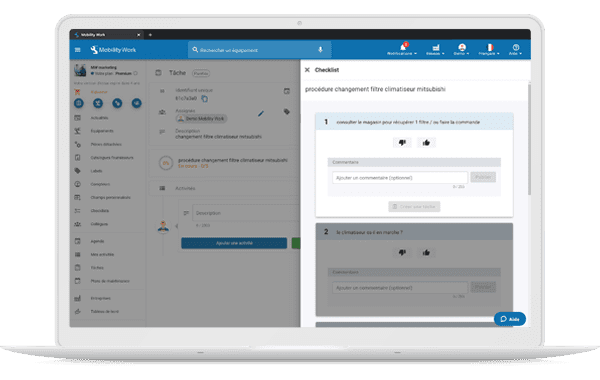
A security checklist in Mobility Work CMMS
Regarding the interventions of preventive maintenance (cleaning, greasing, checks, replacement of wear parts...), which are regular and planned, we can plan for protective devices which make it possible to minimize the risks of accidents or exposure.
More generally, the prevention of occupational risks starts with the design of machines, which must be built in such a way that end users can maintain them without too much difficulty or risk. It also involves the design of workplaces, in particular industrial buildings, which must provide for the conduct of maintenance interventions and integrate devices intended to ensure the health and safety of operators.
Improving communication between maintenance actors
Maintenance management always involves several stakeholders. It concerns At the very least a production operator and a maintenance technician, but also often colleagues or their line managers: production manager, maintenance manager... But, as we saw above, maintenance interventions also increasingly involve people outside the company or the teams directly concerned.
This multiplication of stakeholders poses problems in terms of security, especially in terms of communication and access to information. Therefore, implementing tools (for example mobile CMMS software) and procedures that promote smooth communication allows for much better risk management.
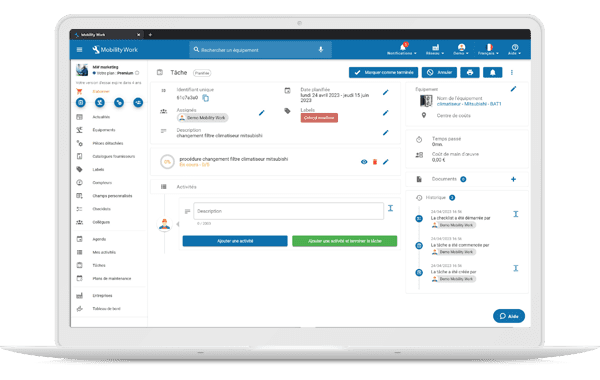
Easily manage the maintenance of your equipment thanks to CMMS
To improve maintenance safety, it is therefore recommended to:
- centralize information on equipment, so that each stakeholder has quick and easy access to it: regulations, safety instructions, operating procedures, etc.;
- facilitate communication between stakeholders and between teams: production, maintenance, external service providers, etc.
Implement a prevention plan
The implementation of a formalized prevention plan allows better risk management and therefore promotes the safety of personnel, especially in a context of outsourcing and subcontracting maintenance. Security management must therefore be shared and coordinated between the companies involved in order to limit the risks of “co-activity”. La coordination between maintenance teams and production teams plays an essential role in risk management.
To reduce them, a rigorous schedule defining and organizing the intervention steps of each company and each team must be established, with certain common rules: electricity or water cuts, protective equipment, marking and signaling, etc. This organization is described in a prevention plan, imposed by law as soon as a minimum of hours of intervention is likely to be exceeded.
Of consignment procedures must also be put in place, to avoid any untimely start-up of a machine or equipment during an intervention. In fact, many accidents occur following the start-up or release of residual energy (electrical voltage, pressurized fluids, moving parts, etc.) while a maintenance operation is in progress.
Consignment includes all the means of protection temporarily put in place on equipment to put maintenance workers in safety. The consignment procedure includes:
- the separation of the equipment from its energy sources (electrical, hydraulic, hydraulic, mechanical, pneumatic, etc.) that may lead to movements, fires, electrocutions, projections, poisoning, etc.;
- condemning separation;
- the dissipation of accumulated energies;
- verifying that the equipment is no longer supplied with energy.
Before each intervention, the registrar must ensure that a risk analysis has been carried out, that the operating procedures are defined and available, that the responders have received the information adapted to the tasks to be carried out.
Why CMMS allows better risk management
By choosing a CMMS software efficient, and therefore mobile, maintenance risk management is easier and more effective.
On the one hand, it allows centralize information. With a mobile CMMS application, each participant can easily and quickly access, from their smartphone or tablet, all the information related to the equipment before starting their task.
On the other hand, the internal communication is more fluid if the CMMS software has a chat function between users, which allows them to exchange easily if necessary, including between members of different teams or different companies.
In addition, CMMS allows managers to better manage maintenance schedule, in order to guarantee staff a properly secure work environment and complete information on the risks of each intervention.
In addition, this solution makes it possible to improve the prevention by making safety instructions available to stakeholders wherever they are and at any time.
Finally, good CMMS software makes it much easier to generalize preventive maintenance plans, safer than curative maintenance.

Easily create maintenance plans in your CMMS
While the safety of maintenance and production personnel should be a constant concern for any industrial site manager, it can be affected by the multiplication of stakeholders. However, adopting a GMAO effective and easy to use by everyone makes risk management simpler and ensures the best possible security for all teams.
Any questions?
Contact us to discover the first CMMS that can be deployed in 3 weeks.