Is the digitalization of businesses a key growth factor?

Ariège (Occitanie region), a department marked by a strong industrial tradition, has in particular seen major names in forging and foundry establishing themselves on its territory over the past 200 years. Today, there are more than 4,000 industrial jobs in the aeronautics, renewable energies and metalworking sectors. The proximity of the Toulouse metropolitan area benefits the local industrial fabric and an entire department that offers space, skills and development potential and therefore sees the establishment and development of industrial jewels such asAubert & Duval.
The territories of Ariège therefore attract innovation and new technologies. For example, the Departmental Council has just decided to invest 120 million euros in the digital coverage of the territory with all of Ariège eligible for fiber in 2025 (FTTH). All the areas of activity and major industrial sites in the department already benefit from a high or very high speed network, so the digital divide is non-existent.
We met Didier Kuss, director ofAriège Attractiveness Agency, an entity that promotes the department and its territories to project leaders and creators of activities and jobs and that supports entrepreneurs wishing to set up there in order to develop their business and adopt good practices.
Can you present your business in a few words?
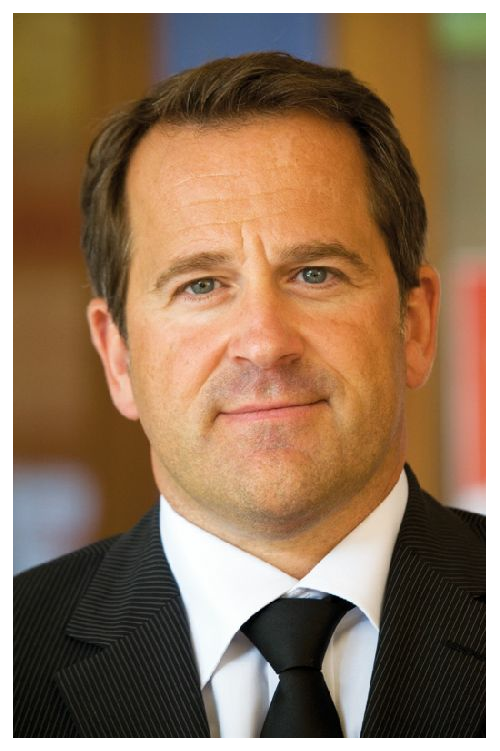
My name is Didier Kuss, and I am the manager of the Ariège Attractiveness Agency (AAA) whose missions and activities consist in promoting Ariège in terms of installation projects, development and the arrival of activities that create jobs in the department.
We travel directly to the field with Local Authorities (Communities of Municipalities and Urban Communities) in order to support projects that decide to settle on the territory by offering them all engineering, both technical and financial, to ensure their sustainable realization, whether in terms of land, construction and building or even all investments and organization to improve the functioning of the company.
From industrial groups to small businesses, we work as much in service sectors to industry, from crafts to production, commerce, tourism, personal services...
What is your observation concerning the digitalization of companies located in Ariège?
I believe that it is no different from the whole of France: some are very familiar with the problem and have taken the lead on the themes of digitalization, digital uses, 4.0 factories... In truth, we often have the impression that some companies learn that they are doing 4.0 without knowing it.
Others have begun to undertake this transformation and are in a phase of appropriating all the constraints and opportunities that this can represent. Still others, who can be said to be late or waiting, have not yet begun this work and diagnosis.
I am not sure that the proportion of the three categories in rural areas like Ariège is so different when compared to that in urban areas. In terms of volumes, there is of course a striking difference, on the other hand, in terms of proportion, it is not so clearly marked.
In your opinion, what does digital technology bring to a company, regardless of its field of activity?
The benefits are numerous: in the first place, it makes it possible to adopt a customer-oriented approach. Whatever the sector of activity, we are all looking for customer satisfaction in order to optimize and create value. Finally, digitalization is one of the ways to strengthen this famous relationship with the customer.
We therefore note a first advantage that can in particular be measured outside the company, namely everything related to the customer relationship and the resulting organization. The second aspect concerns more what is internal to a structure and in particular the optimization of the company's industrial, commercial and organizational processes.
On the other hand, if one engages in a digitalization process within a company, it will necessarily be necessary to touch on the organization. You have to be aware of this from the start, but it is often a blockage or at least a reluctance on the part of business leaders since it precisely calls into question operations that have been established for many years. However, in essence, digitalization will shake up these established orders and have a real impact.
Digitization processes must also be adapted to the situation of the company and to the organization that one wishes to set up.
I will take the example of tourism, a sector of activity in which we were not very present a few years ago. A third of the hotels in the department do not offer the possibility of booking online. We can make the argument that these structures may not need them because they are thriving, but in my opinion that is not the case. These new tools are necessary to ensure customer satisfaction and the development of the tourist offer.
Do you think that the digitalization process is essential for all types of industries?
I think so. For this to succeed, you must be in a position to move the entire organization at the same time as the digitalization process progresses. To resume my previous example on the hotel sector, it is not because you add an online reservation that this will necessarily improve the occupancy rate, because this does not necessarily mean that the hotel page will be consulted more, nor that the organization of the hotel will take into account the satisfaction of customers who book online and who have different expectations.
There is an established link between the company's global strategy and digitalization. In some ways, this constitutes a new stage in the search for efficiency in organizations and businesses. We are in a world more and more competitive and interdependent with supply chain logics, customers, suppliers, subcontractors, partners... By definition, it is much easier to understand digitalization from the moment you adopt a digital logic than by staying at the pen and paper stage.
Are the transitions you are supporting still well accepted?
Unfortunately no, but again nothing “abnormal”. Not everyone is at the same level of ownership of the problem or the solution. However, there is a fundamental tendency for businesses to turn to these themes, and industry is a good example. This transition is made possible thanks to the actions that have been taken to achieve it, just like the factory of the future.
It is also certain that techniques, processes and investments cannot be satisfied; it is necessary to work in parallel on human resources and training. In passing, I think that this is a part that is often missing in the appropriation of Factory 4.0.
Robotization, organizations, electronic data exchanges, paperless... Certainly, all these approaches make sense, but if we do not work in parallel on the human being and the capacity to be able to integrate, integrate and adhere to these digital transformations, we are guaranteed to block precisely because we question organizations, histories and histories. Change has always been a source of insecurity, especially if the topics are not under control.
The best way to approach these transformations is to first explain why and then discuss how. This is one of the topics that our agency and its partners try to promote, whether at the level of business sectors, such as tourism or industry.
As far as our territory is concerned, the question of the digitalization of businesses and industrial organization is at the forefront. This is one of the subjects that can slow down an entire industrial fabric in its organization and integration of new digital habits.
Of course, an organization is able to isolate itself and function: but until when and at what cost? Nothing prevents you from being resistant to certain subjects, but choosing is always giving up. A company, SME or TPE, can be extremely efficient but it will not grow. However, as soon as the stated objective is to develop and create value, activity and jobs on a territory, this structure will necessarily be hampered by a glass ceiling. Digitalization is still necessary when you want to adopt a development strategy to be ever more efficient.
CMMS is an innovative tool that brings digital technology directly into factories. What do you think?
I met Marc-Antoine Talva (CEO of Mobility Work), who is based in Ariège, about 18 months ago. He explained to me that his CMMS (Computer-aided Maintenance Management) solution was present all over the world, but not on our territory. So I brought together the department's main manufacturers from all sectors so that Marc-Antoine would present his next-generation maintenance management software to them and so they could understand the added value that the tool would bring to their organizations. Since then, it has convinced a growing number of companies in the department.
I find The idea of intelligent Mobility Work CMMS, because it is based on a simple approach based on viral principles adopted by well-known social networks and which are now an integral part of our personal lives. This CMMS is clearly distinguished by its ease of transversal access and proves that it is possible to have innovative local solutions in relation to a maintenance problem.

The Mobility Work search engine allows you to find your equipment in one click, and to access the results of your network and the community
I believe that any type of organization can find an interest in Mobility Work CMMS and that is precisely why the solution is interesting: it is both a product and a completely innovative way of looking at maintenance. Indeed, instead of spending several thousand euros on traditional CMMS software, thanks to Mobility Work, we benefit from a participatory and community tool. I remain convinced that these are topics that can go viral because, given the low cost of the deployment and the tool, it can go very quickly.
Thanks to Mr. Kuss for his valuable testimony! Mobility Work promotes a culture of change and offers an easy to use and intuitive 4.0 solution for all types of industries. Follow us on our social networks (LinkedIn, Facebook and Twitter) to be kept informed of our news.
Any questions?
Contact us to discover the first CMMS that can be deployed in 3 weeks.