How to manage maintenance in the luxury industry?

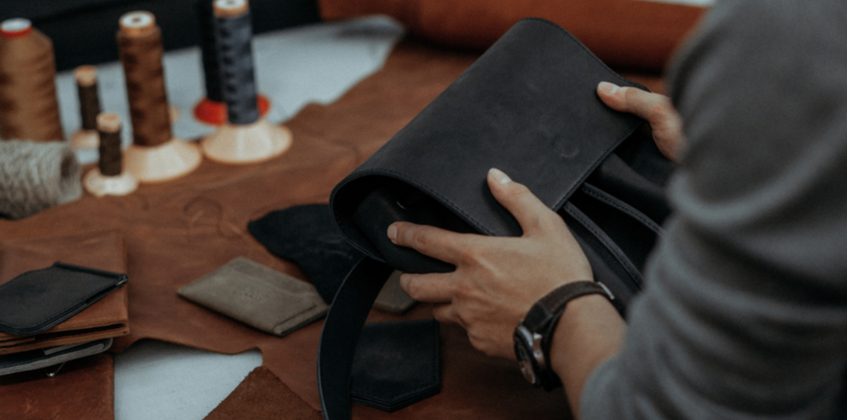
Carried by a few heavyweights in the French economy, The luxury sector has swung into the industrial era. In order to conquer new markets, major French groups have moved from an artisanal mode of production to an industrial world. However, they still rely on workshops and subcontractors renowned for their expertise.
In this particular context, How to optimize maintenance in order to increase productivity, while adapting to the specificities of the sector? How to modernize the management of the machine park and production tools without interfering with good communication and effective collaboration between the various players in the manufacture of luxury goods?
While the challenge is detailed for this flagship of French industry, new digital tools, from another dynamic national sector, can enable luxury companies to successfully meet it. In terms of maintenance management, Mobility Work CMMS is a particularly advantageous solution which has already attracted major groups such as L'Oréal or Shiseido.
Luxury, a separate economic sector
The luxury industry occupies a special place in the French economy, for several reasons.
A dynamic industrial sector
Today, luxury and fashion represent around one million direct and indirect jobs in France, and our country is the world leader in the sector. Above all, it is one of the few French industrial sectors that create jobs and resist relocations, or even relocate its production.
Fashion, leather and watchmaking and jewelry are the main pillars (40% of jobs), followed by wines and spirits (17%), perfumes and cosmetics (17%) and gastronomy, with its palaces and 2 and 3 star restaurants (15%). Tableware or design complete the picture. And so few people know it, France is a leader in the manufacture of luxury bottles. The Bresle Valley, in Seine-Maritime, thus has nearly 10,000 employees spread over 70 companies that manufacture more than 70% of global production for perfumery, spirits and cosmetics. Better known, the “Cosmetic Valley” has 3,200 companies, from Sisley, to Shiseido via Coty or Clarins.
An export-oriented sector
While the French trade balance is generally in deficit, French luxury companies are enjoying considerable success internationally. The 9 French companies present in the top 100 of the largest luxury players in the world alone account for 24.3% of global sales (Deloitte ranking, Global Powers of Luxury Goods, 2018). Perfumery-cosmetics, for example, is the second largest export sector after aeronautics.
A dense local fabric
Another specificity of the sector is that it irrigates a large part of the national territory. The superposition of the production sites of all luxury professions thus highlights a geographical coverage of almost all of France. All territories therefore benefit, in one way or another, from these jobs, through ecosystems of very diverse nature and size.
A great diversity of actors
Moreover, this diversity is another characteristic of French luxury. Many professions belong to the sector, among which we can highlight several excellent jobs that make France famous internationally: perfumes and cosmetics, leather and leather goods, design and decoration, high fashion and fashion, earthenware and fashion, earthenware and porcelain, earthenware and porcelain, earthenware and porcelain, jewelry and porcelain, jewelry and watches, jewelry and watchmaking, goldsmithing, glass and crystal, hotels and palaces, or even wines and spirits.
In addition, the luxury industry includes both global giants listed on the stock exchange and a vast network of artisans, VSEs and SMEs, who work in collaboration with major companies and sometimes even directly internationally.
High quality requirements
More than in any other sector, the quality of production is a key issue in the luxury industry. To meet the expectations of their customers, businesses must sell products that live up to their reputation, even as production is tending to be increasingly industrialized.
Adapting and optimizing maintenance in the luxury industry thanks to a next-generation CMMS
The characteristics of the luxury industry have major implications for maintenance management in industrial companies in the sector.
Adapting to the standards of foreign markets
To market products abroad, it is imperative to respect the standards in force in these external markets. In the field of cosmetics, for example, the United States requires respect for Standard 21 CFR Part for the management of electronic documents, which involve the use of computer tools that comply with this standard.
Promote good communication between partners
The characteristics of the luxury ecosystem, with multiple businesses of very different sizes, require setting up processes and tools that promote good communication. In terms of maintenance, the ideal is to adopt a community and mobile CMMS, so that the various stakeholders and service providers can easily exchange information, documents and instructions.
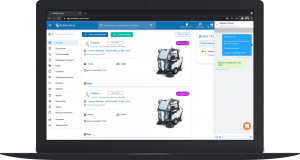
The chat function in the Mobility Work application promotes communication within factories
Develop preventive maintenance
To ensure optimal production quality, it is important that machines and equipment are always in perfect working condition. To achieve this objective, the establishment of preventive maintenance routines, or maintenance plans, is a major asset. Companies in the sector therefore have every interest in choosing a CMMS solution that facilitates the creation and management of maintenance plans, to promote their use and compliance by teams.
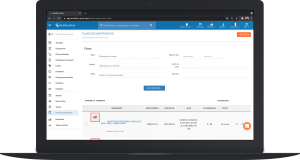
Easily create maintenance plans in Mobility Work
Mobility Work, a CMMS adapted to all businesses
The CMMS offered by Mobility Work can be used by large groups as well, such as L'Oréal, only by small and medium-sized businesses. She is at the same time easy to set up and simple to use, while being suitable for use in large factories or industrial groups. In addition, the rates are particularly attractive because they depend on the number of managers and maintenance technicians who use the application.
Discover our next-generation CMMS application for yourself by trying it free for 7 days!
Any questions?
Contact us to discover the first CMMS that can be deployed in 3 weeks.