Podcast: Maintenance and CMMS in the face of the health crisis

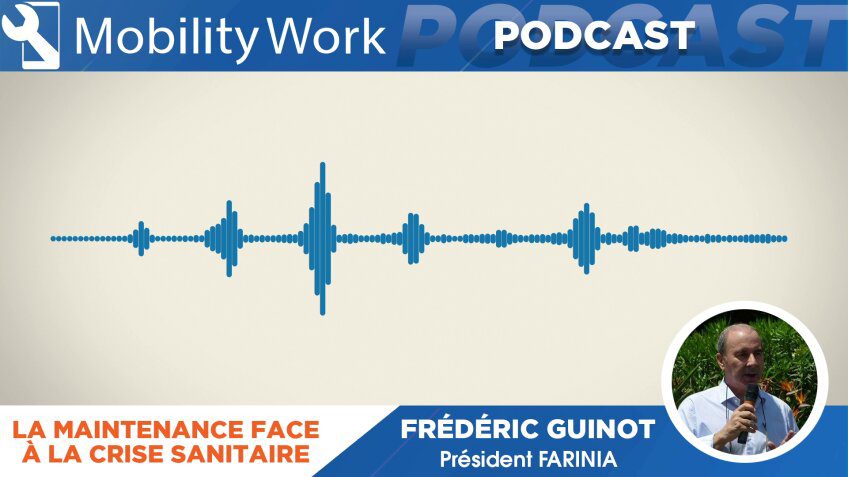
As global economies falter and factories are mostly shut down or facing periods of poor business recovery, the time has come to address the question of the usefulness of maintenance in the face of the health crisis. On this occasion, we spoke with Frédéric Guinot, CEO of Farinia Group. Discover his testimony!
Managing maintenance during a health crisis
“Mobility Work: Hello Mr. Guinot, and thank you for accepting our invitation. I have a first question to ask you, which is a bit general but nevertheless important: how are you and how is Farinia coping with this unprecedented period?
Frederic Guinot: You know that Farinia is a line that mainly controls companies producing industrial goods: we have therefore been at a standstill for more than three weeks. It was very hard for everyone, it forced us to really revisit everything we do. We've been mostly exploring remote working and automation, among others, lately, and that's quite interesting.
We realize that this health crisis has unprecedented consequences on the industrial sector. Some companies are forced to reduce their activity, others on the contrary must increase their production: how do you see this situation?
The first thing we did in an industrial environment was prepare for the recovery, since it is of course extremely painful for everyone to stay at a standstill. We have worked a lot to prepare for the restart with masks, protections, distance...
Above all, we took advantage of this crisis to work with the maintenance teams, who focused on two things: they first took the opportunity to review their maintenance plans according to the production programs that we will have in the coming few months.

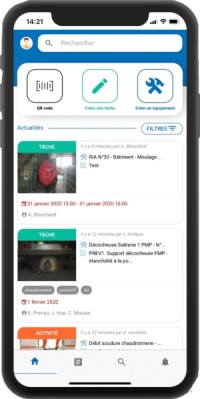
Mobility Work CMMS allows operators and technicians to be autonomous: calendar, checklists, creation of tasks, maintenance plans, notifications for each new activity...
In a second step, they were able to revisit all the tools that make it possible to manage maintenance, including Mobility Work, a software that has made a lot of progress recently and in which there are a lot of new functionalities. So it allowed all the maintenance teams of the Farinia Group to deepen their knowledge of the tools provided by the CMMS.
In this context of crisis, we finally realize that maintenance plays an important role, even though it has very often been underestimated. Do you think that this period will change the way we look at it?
Indeed, traditionally maintenance teams are in the shadows, we cannot see them. To take an image, they say that they often have their heads in the clouds. However, they are crucial and have always been: in industrial groups everyone knows the importance that maintenance teams have for the performance of a company.
CMMS: an essential tool in the midst of a health crisis
They are now being highlighted, and I think they will be highlighted more and more with social networks such as Mobility Work, which nevertheless makes it possible to highlight them and above all to improve the dialogue between maintenance teams and suppliers of machines, equipment and spare parts. This dialogue is often done piecemeal, so it can be dramatically improved thanks to the dynamics of social networks. I think that Mobility Work should be able to leave its mark on this dynamic.
You are talking about Mobility Work, which really belongs to the tools of tomorrow. Precisely, how can we prepare for the post-crisis period with these tools but also, globally, rethink maintenance a bit?
The post-crisis period is divided into two phases. First of all, we will have the very short term, that is to say the next six months, which will be extremely sporty because we will all be confronted, in the world of production, with what could be described as a regatta in flat weather, without wind, with a lot of jolts.
Over time, coordination between production and maintenance teams to ensure the maximum availability rate of the machines will be absolutely essential for optimizing performance.
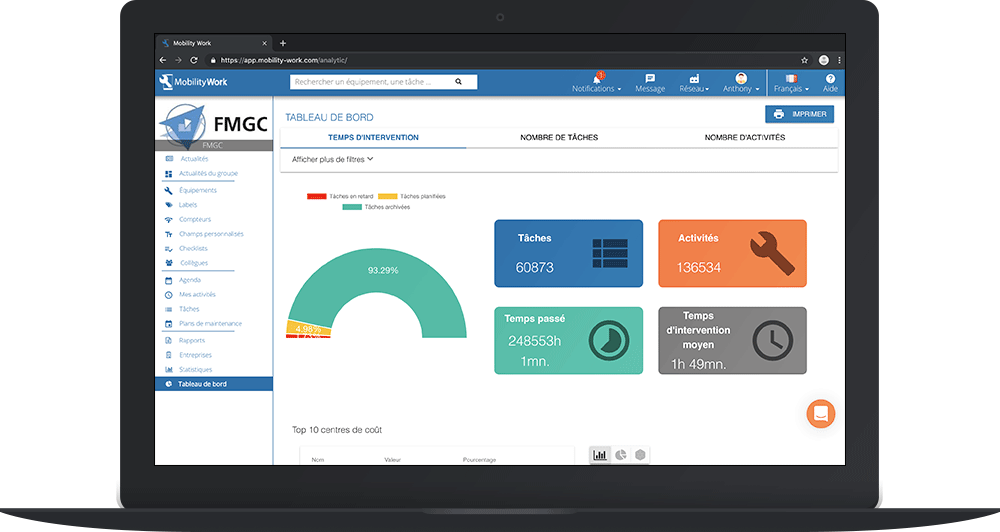
Thanks to the work we have been able to do during these three weeks, we hope to have a very substantial improvement in the programming and scheduling of production and maintenance teams, thanks in particular to Mobility Work, which is a tool that really makes it possible to schedule activities in a clear way.
CMMS: our guide to best adopt your new tool
Last question: what do you think the maintenance of tomorrow will look like, in a world where we can see very well that contexts are more and more unpredictable?
What I think is that in the immediate term most companies will have a lot of trouble finding financing to buy machines. We are therefore going to increasingly move towards the rental of machines.
Mobility Work, through its platform Mobility Work Hub, has a cooperation with the finance company Idinvest in order to develop a Machine as a Service solution. The maintenance of these rental machines will be at the heart of this new service that we will develop, I think, in the future.
Thank you, Mr Guinot, for your answers and thank you all for listening to us. See you soon for a new Mobility Work podcast! ”
Any questions?
Contact us to discover the first CMMS that can be deployed in 3 weeks.