Preventive maintenance of hydraulic equipment

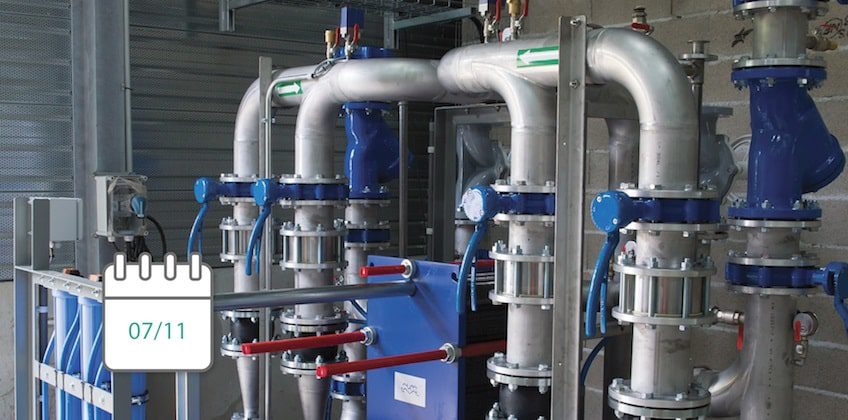
Preventive maintenance: prerequisites for hydraulic equipment
For the maintenance of hydraulic equipment, applying a preventive maintenance strategy is even more important than for other types of equipment. By their very nature, this equipment, which has also undergone numerous improvements in recent years, requires specific monitoring methods and best practices, which must be supervised to ensure the safety of the operator and avoid potential breakdowns. These elements in fact present a risk certain for operators, especially liquid pressure vessels, and are equipped with increasingly complex technology. The main causes of accidents caused by hydraulic fluids under pressure are linked to maintenance faults, to pressurized oil leaks following a seal defect, to the rupture of a circuit element or to the irregular movement of an equipment component.
In order to maintain hydraulic equipment in its intended function without damage for itself as well as for the environment in which it is found, and to optimize the safety of its operation, it is preferable to apply a preventive maintenance strategy. Adapted to all types of installation (electrical, mechanical, pneumatic or hydraulic), preventive maintenance ensures better machine reliability and availability for the company and, as a result, better overall performance. Not very time-consuming, some regular planned actions make it possible to increase efficiency and avoid downtime. We therefore suggest that you come back to some first level maintenance best practices to be put in place and precautions to be taken into account when working on hydraulic equipment.
Preventive hydraulic maintenance, a few reminders
The purpose of preventive maintenance is to reduce the non-functioning of hydraulic equipment by carrying out so-called “planned” maintenance operations, triggered according to various criteria or according to the condition in which the equipment is located (conditional maintenance). These maintenance operations can be Scheduled and Controlled by means of CMMS software (computer-aided maintenance management), which offer comprehensive monitoring of preventive maintenance operations.
Thanks to the calendar available in new generation CMMS solutions such as Mobility Work, it is possible to plan operations based on temporal criteria (daily, weekly, monthly or annual reviews) or monitoring values (meter readings, etc.). This planning allows the maintenance team to trigger alerts and maintenance operations, then to report on them once the intervention has been carried out, using checklists or intervention reports: time of completion, a photo of the condition of the element concerned, etc. A correct and exhaustive entry of information will allow you to obtain a more detailed analysis of your preventive measures and thus better manage your maintenance service.
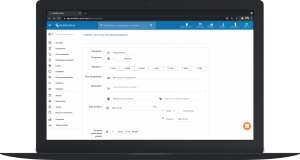
The maintenance plan feature offered by Mobility Work allows you to plan all your preventive and predictive maintenance interventions.
8 daily verification steps
Daily checks are operations that can be performed on your hydraulic equipment every day. With regard to 1st level maintenance, they can be carried out by a maintenance technician as well as by a production operator, and be planned in your CMMS software. Among these various verifications, we can mention:
- Checking the oil level in the tank
If the level is too low, then you need to add oil to get the desired level. The level value before operation and the oil value can be entered in the “counter” menu of your CMMS software.
- Checking the appearance of the oil
The formation of foam on the oil reveals the presence of air on the pump seal or on the suction line connection and can be detected by a loud sound during pump operation or a random malfunction of the receivers. If the oil is cloudy, it means that it contains water. The condition of the oil can be entered by the maintenance technician by integrating a photo of it into the activity report in the CMMS software.
- Checking the clogging of the filters by looking at the clogging indicators
This operation can also be entered in the CMMS and make it possible to determine the state of the filter.
- Oil temperature check
A significant temperature variation in the heat exchanger reveals the presence of an anomaly on the hydraulic installation (failure to supply the cooling fluid or the thermostatic valve). This value can also be entered in the CMMS, directly in front of the equipment, using the mobile version.
- Checking the temperature of the hydraulic unit
An increase in pump or motor temperature indicates the presence of an equipment problem or misalignment.
- Verification of operating pressures.
- Checking the tightness and maintaining the cleanliness of the equipment
This basic maintenance action makes it possible to detect possible leaks.
- Sound level check
In case of unusual noise, Mobility Work CMMS makes it possible to record the sound and integrate it directly into the activity report.
6 weekly maintenance actions on hydraulic equipment
Weekly actions are maintenance operations that must be planned in your CMMS software and carried out every week by maintenance technicians or production operators. Like daily checks, these operations are considered to be first-level maintenance operations.
- Examination of the tightness of all pipes that are inaccessible during operation
In the event of a problem, the degraded element should be replaced directly, then entered this operation into the CMMS by integrating a photo of the defective element.
- Repair of leaks detected during daily visits
Do not tighten your pipes too sharply; it is better to replace the component directly. The elements that may cause the leak may be the following: gasket, ring, flange.
- Cleaning the filters
To be sure of effective cleaning, connect to your CMMS software and consult the manufacturer's documentation for the hydraulic element. Check the elastic couplings between the pump and the motor.
- Checking the inflation pressure of the accumulators
The level of contamination of the hydraulic fluid is verified by taking a sample from the tank. It is important to note the number of operating hours associated with the sample in the activity report in the CMMS software in the “counter” menu.
6 precautions to take before commissioning
Before putting your hydraulic equipment into service, several precautions must be taken in order toensure the proper functioning of your hydraulic equipment as well as the safety of people :
- Check the oil level in the tank,
- Check that the isolation valves are open
- Change pump oil
- Verify the safety of equipment and personnel when equipment is put into operation
- Check the direction of rotation of the pump
- Purge the installation to help the pump prime and remove air from the system
- Perform a running-in period of the low-pressure installation in order to perform a final cleaning of the system
- Set the pressure valves to the lowest possible values
- Verify that the pressure gauge reads zero
The starting range of your hydraulic equipment can be configured in a Checklist saved in your CMMS software. Thus, each time a hydraulic installation is put into operation, the technician must equip himself with the checklist and validate each point, which will ensure a safe start of your machine.

Access all documents (photos, videos, etc.) and checklists from the equipment sheet in your Mobility Work application
In summary, a Good management of the preventive maintenance of your hydraulic equipment requires good planning and especially an updated report of the maintenance operations carried out. Each hydraulic circuit monitoring maintenance activity must therefore measure the temperature and pressure of the oil, the noise level of the equipment as well as the amplitude of mechanical vibrations.
Since Excel files and traditional CMMS software have already proven their limits in the past, a solution such as Mobility Work, the next-generation maintenance management platform, allows you to carry out an effective and regular preventive maintenance routine, while creating an analysis base and a history that will be essential to your future decision-making within the maintenance department. Today, these solutions are within the reach of all companies thanks to their attractive pricing and ease of deployment, and include all the functionalities mentioned above. Digitize your maintenance department and take advantage of the power of the Mobility Work community to maintain your hydraulic installations!
Are you interested in maintenance management and want to know more in order to increase your productivity and save money?
Any questions?
Contact us to discover the first CMMS that can be deployed in 3 weeks.