Industrial purchasing: role and challenges


The industrial sector employs a wide variety of jobs. At the crossroads between the field and the operational, the industrial purchases occupy a decisive position. Acquisition processing, supplier research and relationships, inventory management: The missions of the industrial buyer have a direct influence on the pace of production and the performance of the company. In recent years, its weight has increased significantly until it has taken on a strategic dimension. Guarantor of expenses, it offers the company the possibility of improving its margins. A keen market expert, he contributes to the improvement of production and innovation.
Industrial purchasing: overview of a strategic function
The primary function of Purchasing is to get the right function at the right price. By function, we mean equipment, raw materials, components or even spare parts. In other words, buyers are responsible for finding and acquiring the elements necessary for the production and assembly process to run smoothly. To achieve this objective, however, several issues need to be taken into consideration.
Cost reduction
Traditionally, the function is often associated with a more global ambition to reduce costs and improve company margins. Its role is to combine the reduction of expenses and the performance of the production chain. To do this, industrial buyers will calculate the real price of a function, by several means:
- Cost of production. It corresponds to all the direct and indirect costs associated with the manufacture and distribution of the product sold. The difference between turnover and cost of production corresponds to the company's profit. Also, the cost of production is a key element in calculating the performance of an industry. Purchasing can influence this by analyzing certain industrial suppliers (margin rate, manufacturing time, etc.) when negotiating contracts.
- The price on the market. The aim here is to compare the purchase price set by your own suppliers to that applied by the competition. To do this, buyers will be able to conduct a market study.
- Commodity indices. The price of oil, steel, or even plastic and rubber can have a strong impact on the cost of production. Buyers have an effective way to avoid that fluctuations in these prices have an impact on the company's business and finances. When negotiating supply contracts, buyers may ask for an indexing clause to be included in them. This means that below a given rate, changes in the prices of raw materials cannot have an impact on the selling price of industrial suppliers.
For the same purposes of optimizing expenses, Industrial Purchasing also participates in the inventory management. How much will production use? What are the sales forecasts? How much can I store without seeing my expenses soar? Operators must collaborate with the entire supply chain to determine the real needs of its actors.
Processing industrial purchase requests
For several years, businesses have abandoned paper-based procedures in favor of IT solutions. Supply chain actors use specialized software to communicate their needs in real time. Maintenance teams, for example, can thus trigger a purchase request by connecting their ERP and their equipment. La Mobility Work CMMS (computer-aided maintenance management) contributes to the improvement of maintenance through a link with the ERP.
Once the request is formulated, it is entered in an allocation order and then validated. After which the buyer associates a contract with a product reference. It matches an industrial supplier, a price to the expressed need.
The set is then transmitted to the latter by EDI (electronic data interchange). In addition to minimizing the risk of error, it is a real time-saver. The information is processed almost in real time.
Sourcing
The search for industrial suppliers is another important part of the job. When concluding a contract, the buyer incurs the responsibility of the company. This is why there is a set of criteria to ensure the compliance of suppliers.
Sourcing can be done in various ways:
- Through a call for tenders for public companies;
- At dedicated fairs, in France and abroad;
- Thanks to its network of buyers;
- Through specialized platforms, such as Mobility Work.
Mobility Work Hub aims to offer industrial suppliers And to maintenance experts a secure interface for networking and exchange. Suppliers and service providers share their catalog of official products there, thus making it available to technical teams. From their Mobility Work CMMS, they can consult the available products, profiles and contact them directly.
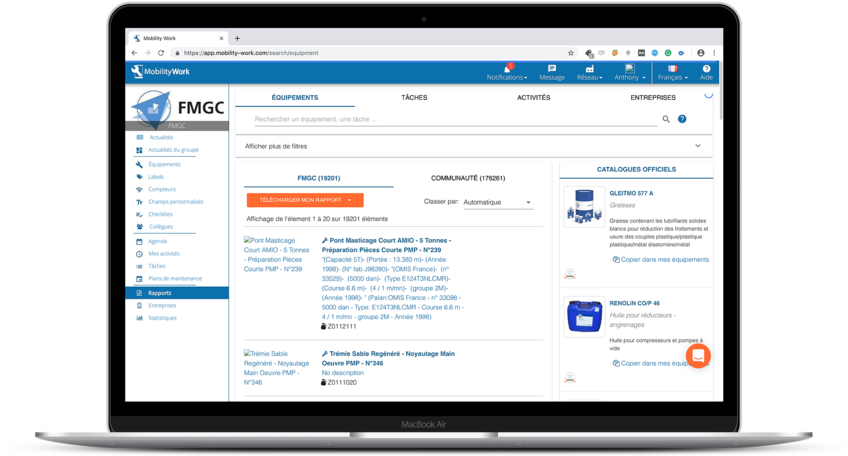
Mobility Work Hub makes you visible to a qualified audience
Once contact is established, the buyers, alongside Finance, draw up the financial health of the supplier. Subject to confidentiality agreements, they will be able to consult certain documents such as income statement statements or inquire about future investments.
Then the company carries out a audit phase. Experts go to the industrial supplier to carry out product or development audits. This process may take several days. If the conclusion of these audits raises certain non-compliant aspects, Purchasing may request the implementation of action plans. After a predefined period of time, if the results are conclusive, both parties can conclude the contract.
Supplier relationships
The Purchasing function is one of preferred contact persons for industrial suppliers. It is she who, for example, negotiates contracts. Both parties agree on prices or delivery conditions. During this process, the buyer also negotiates the end of life of the products. Depending on the needs of the company, together they define a Purchase calendar, on which the manufacturer can align its own production of consumables. This calendar cannot be interrupted overnight. In the event of a cessation of marketing or modification of the final product, the customer undertakes to continue its acquisitions for a certain period of time. More often than not, the supply contract includes a clause defining the maximum quantity of inventory that the company will be able to buy from the manufacturer.
Increasingly, supplier relationships are becoming real partnerships. Some are even committed to a logic of co-development. Listening to their customers, suppliers access field data on the use of their products by connecting to Mobility Work Hub. With the help of this user feedback, manufacturers adapt to changes in their market.
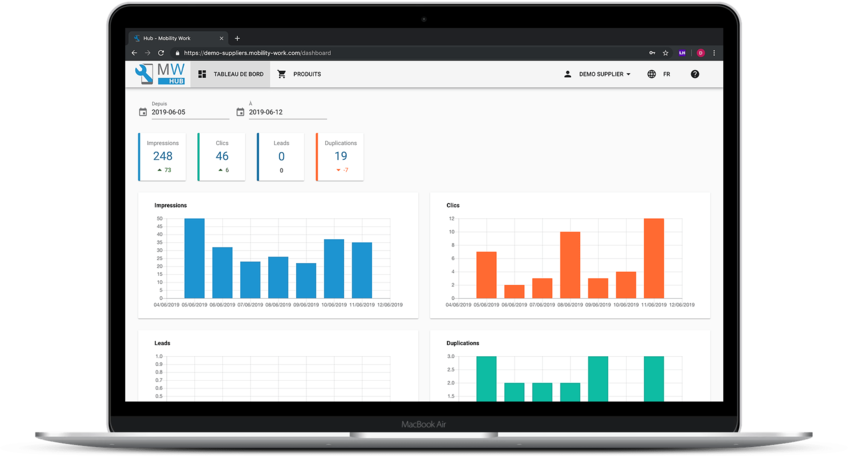
Mobility Work Hub is an interface for connecting industry players. By joining it, industrial suppliers share their product catalog with the users of our new generation CMMS. Mobility Work Hub offers them a increased visibility with a qualified audience of maintenance experts and facilitates exchanges.
Industrial purchasing, a versatile profile
Highly sought after by large groups, the profession of industrial buyer is complex and intersects several facets. With the increasing outsourcing of services, buyers are now on the rise and specialized profiles are attracting the attention of recruiters. Depending on the size and activities of the company, Purchasing may cover a more or less broad field of action.
The place of buyers in the company
In the industrial sector, this department works directly with other actors in the supply chain. Internally, they collaborate in particular with Marketing, which measures the market's interest in products and sets the pace at which they are marketed. Buyers talk to R&D and design offices on issues of improvement and innovation. Among its interlocutors, we also find: Production, Procurement or even Finance. Externally, they act as a relay between the organization and suppliers and service providers.
In large companies, this function can be divided into a product portfolio on which buyers are distributed. Although there is little exchange between products, there is a synergy between buyers in the same wallet. Whether or not they operate in the same geographic area, they can collaborate on common issues. For example, it is common for them to share information about their industrial suppliers with each other.
What is a buyer?
Industrial purchasing is an increasingly demanding profession. Today, young workers generally enter the job market after completing a five-year post-baccalaureate course. Again, the profiles vary: business school, engineers in retraining, technical and commercial training etc. Nevertheless, players in the industrial sector will prefer specialized professionals, either by university or by professional means. As Purchasing takes on an increasingly strategic role, its operators must demonstrate many qualities.
Professional skills
It is not easy to draw up an exhaustive list of the qualities that make a good buyer. However, certain skills are essential to the exercise of their activities:
- Market knowledge. First, any professional must have a solid knowledge of the market and its dynamics, the supply chain, the business sector and the company's portfolio.
- Negotiation skills. Naturally, a buyer must have a certain skill when negotiating contracts.
- Computer skills. Order management or supplier relationships: new technologies now occupy an important place in their daily lives.
- Proficiency in English. A growing part of their activities is carried out internationally. Proficiency in one or more foreign languages is a real asset.
- Legal bases. In order to better negotiate and manage supply contracts, teams can have certain legal and international trade bases.
Transversal skills
In addition to the knowledge acquired during their training, buyers must have certain qualities:
- Relational ease. Having good human qualities facilitates exchange and collaboration with the various actors in the supply chain.
- Rigor. Teams are often required to juggle various projects. In addition, some buyers may be responsible for managing a team or a project. Rigor and organization will therefore often be the keys to success.
- Curiosity. The profession of industrial buyer is accompanied by a certain technical aspect. Choosing this path means taking an interest in the specificities of your sector of activity, being on the lookout for market news. Moreover, according to the companies, buyers may be regularly reassigned to another family of products.
With the rise of Industry 4.0 and the interconnectivity of the supply chain, the profession of industrial buyer is constantly changing. New digital solutions are gradually appearing to support them in their efforts. Mobility Work Hub was designed to bring industrial suppliers and maintenance experts closer together, and to simplify their exchanges.
Any questions?
Contact us to discover the first CMMS that can be deployed in 3 weeks.