SCM: improve the management of your supply chain

From the order of raw materials to delivery to the end customer's door, many actors are involved in the manufacture of a product. And each has its own specificities. In order to guarantee the satisfaction of its customers, any company must master the steps that punctuate its supply chain. This is called Supply Chain Management (SCM). What should we understand behind this concept? How does it represent real added value for the company?
What is the supply chain?
The concept of supply chain refers to a complex environment that extends beyond factory walls. True guarantors of the efficiency and quality of production, its actors are responsible for coordinating the three types of flows composing it.
Physical flows
Physical flows are equivalent to what is more commonly known as logistics. They correspond to the movements of raw materials, goods and finished products, as well as to their storage. If the traditional supply chain model has developed around the management of these flows, it is because they represent one of the main expenses.
It's all about balance here. In order to ensure the continuity of operations, operators must meet the fluctuating needs of the production chain and guarantee the supply of consumables, while avoiding excess stocks.
Connect your maintenance management software to your ERP allows you to streamline exchanges between the field and your Purchasing Department. Mobility Work goes further and allows you to contact your suppliers directly from your new generation CMMS.

Get in touch with official Mobility Work Hub suppliers from your CMMS
Financial flows
The aim of the supply chain is to ensure the availability of the necessary resources at the right time, in the right place and at the best price. With regard to this last point, operators must control all currency movements within the company, but also between partners, suppliers and subcontractors.
Several functions are affected by these flows. For example, we will mention Purchasing, responsible for sourcing operations and negotiating supply contracts with industrial suppliers. Sales teams, for their part, are in direct contact with customers and ensure, among other things, that payments are received correctly.
In addition, controlling supply costs through supply contracts allows the organization to better estimate its sales prices - and by extension to define an adequate strategy.
Information flows
In an increasingly digitized environment, information management is becoming one of the most critical parts of the supply chain. Faced with the multiplicity of data available, the real challenge for companies today is to analyze them in order to anticipate the needs of the organization.
While the information collected is primarily linked to logistics activities (stock levels, equipment condition, etc.), it does however extend to the entire product life cycle:
- Supplier relationships — Before entering into a partnership with new suppliers, it is essential to conduct a phase of auditing their performance, but also that of their suppliers. Prices, terms and delivery times, quality and customer satisfaction are all factors that will influence the efficiency of your supply chain.
Mobility Work Hub is the first platform dedicated to relationships between industrial suppliers and maintenance experts. Consult the supplier profiles and exchange with our user community to receive their opinion.
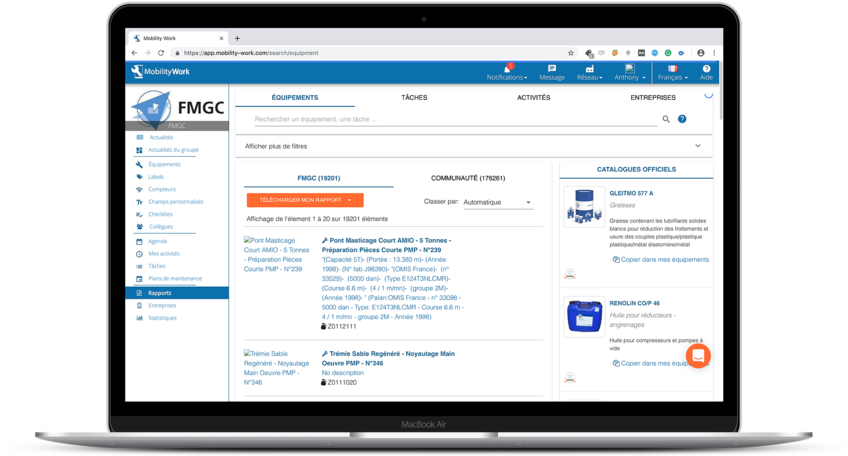
Access the official Mobility Work Hub supplier catalog from your CMMS
- Customer support — Delivery (whether in-house or not) and customer follow-up have a significant influence on the continuous improvement of the supply chain. As customer satisfaction is at the heart of the supply chain, a growing number of its players consider the analysis of feedback as a competitive advantage. From this perspective, customer reviews are a fundamental flow of information in the overall performance of the company. Customer support is therefore the voice of customers within an organization in terms of delivery, packaging, return or refund conditions, prices...
It is therefore up to each function to accurately collect and analyze this information in order to improve supplier performance, production quality, performance, and, ultimately, to perfect the customer experience. In this, precision is the keystone of the supply chain.
Why invest in supply chain management?
From Purchasing to R&D to industrial maintenance, all links in the supply chain are interconnected and play a defined role within the value chain. At the same time, each of these functions faces a growing number of obstacles: demand volatility, inventory management, CSR issues... SCM offers company managers the means to protect themselves against the hazards specific to their environment.
The importance of supply chain management
SCM (supply chain management) consists in formulating a set of best practices that allow organizations to identify the actors in their supply chain, improve relationships and better manage their flows. At the company level, this makes it possible to reduce costs, possible losses as well as production times. Ultimately, the objective of SCM is to offer the end customer the best possible experience.
To do this, SCM is based on fundamental principles.
The pillars of SCM
- Coordinate. Developing an SCM strategy requires in-depth knowledge of the organization's structure and activities. It is therefore imperative to define a common frame of reference in which each operator finds its place.
- Supply. In an increasingly competitive environment, industrial suppliers are becoming real partners. By streamlining the management of supplier relationships, contracts, deliveries and payments, businesses gain in responsiveness and reliability.
- Produce. To ensure the smooth running of operations and company performance, supply chain managers measure and analyze the quantity and quality of production in real time, in order to ensure that it meets market expectations.
- Distribute. Coordinating customer orders, organizing deliveries, managing vehicle fleets, managing customer invoices and receiving payments: logistics teams act as a bridge between the factory and the end consumer.
These four elements form the foundations of SCM, which every manager must master. With recent developments in the supply chain, the following concepts should be added:
- Analyze. The industry of the future gives top billing to data analysis, and more particularly to predictive analytics. Whether it's assessing inventory levels, monitoring the condition of equipment, or optimizing sourcing operations, supply chain operators now have numerous tools at their disposal to streamline their activities. Mobility Work Hub is aimed at industrial suppliers who want to easily and quickly collect field data on the use of their equipment and consumables.
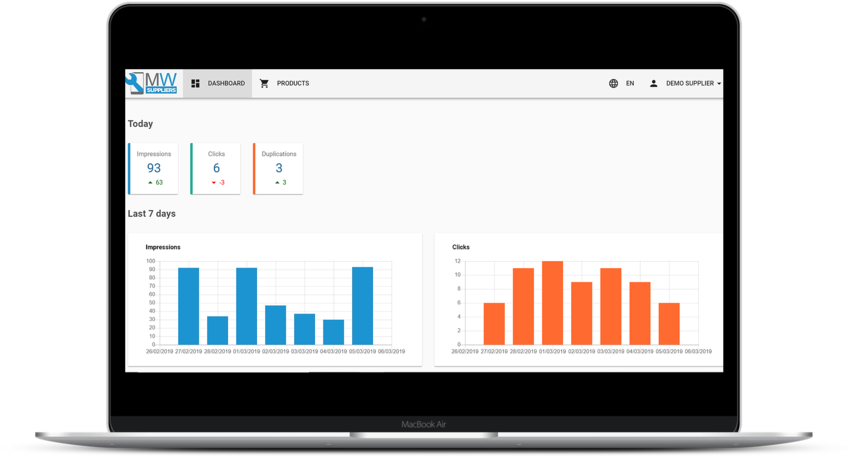
Get statistical feedback from your customers and guide your decision-making
- Secure. In order to combine dynamism and sustainability, it is essential to establish a stable and secure environment. It is up to management teams to define a set of guidelines and best practices in terms of human resources, IT, financial, quality control...
How can I optimize the management of my supply chain?
How does the structuring and streamlining of your supply chain processes support the growth of your business? This is what the case of Starbucks tells us.
The Starbucks case
Several years ago, the American coffee subsidiary had to face significant logistical challenges: order delays, excess stocks, etc. Its management model was not adapted to such success, leaving its operators unable to meet demand. To continue the exponential growth of its activities, it had to completely rethink the management of its supply chain.
The group therefore decided to make a radical transformation in three stages:
- Reorganize and simplify: activities were centralized, divided and assigned to teams whose roles were clearly defined.
- Reducing costs and improving service: each function was responsible for identifying possible areas for improvement in order to assess the overall performance of the supply chain. However, this was only made possible by the establishment of a framework common to the organization.
- Anticipating the future: in order to perpetuate the company's activities, managers have chosen to invest in the recruitment of specialized talent, as well as in the training of current teams.
What lessons can we learn from it?
This brief overview of Starbucks' transformation provides us with lessons that every organization should strive to apply.
Eliminate complexity. Make sure you have a clear vision of your organization. For example, be sure to better organize the monitoring of your relationships with your partners, but also of the activities of your teams.
Prioritize costs. Evaluate and order the costs of each function in your supply chain before seeking to reduce them. Better understanding your cost structure allows you to make better decisions for the performance and sustainability of your organization.
Establish a frame of reference. Do not hesitate to clearly define the role and scope of action of each team. Define key performance indicators (KPIs) and monitor their evolution in order to align the activities of each function with those of your company and your partners.
Focus on innovation. Take time to think about the future. Combine indicator monitoring, cooperation between teams, predictive analysis and customer feedback to anticipate changes in demand and maintain your competitive edge.
Recent developments in the supply chain have made it a complex, interconnected structure, at the center of which is the customer. Good supply chain management is measured by the satisfaction of your end customers: the products are of high quality, delivered on time and at a lower cost. Each stage of the supply chain, in turn, will have a direct impact on the overall performance of your business and the satisfaction of your end users. It is therefore essential to leave nothing to chance and to adapt the management of your supply chain to the specific needs of your company.
Any questions?
Contact us to discover the first CMMS that can be deployed in 3 weeks.