Supply chain: a major risk management challenge?


La Supply chain (supply chain) is a complex ecosystem in which a growing number of interdependent operators coexist. With the multiplication of these players, operational efficiency and responsiveness are no longer sufficient to manage operational risk. It is only by identifying the Risks Linked to their supply and distribution networks that manufacturers can guarantee the smooth running of their logistics activities.
However, the concept of risk is by nature difficult to assess because it is subjective and cyclical. So how do you assess the impact of these risks on your business? How can the effects be regulated? Purchasing and Supply Chain (or Logistics) functions now have a large number of tools and methods to identify and control risks threatening their supply chain.
How to identify the risks affecting your supply chain?
La Risk management represents a real challenge for supply chain actors. Indeed, consumers are now increasingly paying more attention to the quality and origin of their products. These are all factors that influence their buying decision. In order to meet these requirements and to guarantee the sustainability of their activities, companies must maintain full control of their supply chain. To do this, they need to have a global vision and to put in place a structured set of responsible practices adapted to each type of risk.
Supply chain teams are facing Several risk categories Which can have significant consequences on the supply chain. Each of these risk factors corresponds to a set of best practices to be integrated into business processes.
Internal risks
Internal risks are intrinsically linked to the nature of your organization, as well as to your sector of activity. It is therefore possible for you to directly influence them and eliminate the root causes.
- Project management : poor project management can affect the proper conduct of your operations, as well as your relationships with your suppliers. This is often the result of an error in the allocation of human or physical resources. To overcome this, make sure that the project manager has a thorough knowledge of your supply chain and its actors.
- Human resources : probably one of the most difficult to predict, human risk can be associated with project management. A work stoppage, a lack of expertise or even an error in judgment can have an impact on the pace of production.
External risks
As we will see later, external risks are very diverse in nature. They derive from your Work environment, the context, as well as the activities of other actors in the supply chain. Although you do not have direct control over their causes, you can nevertheless understand them and establish a set of Process to minimize the impact on your business.
Financial risks
Whether it's inflation or volatility, unexpected price changes complicate the Purchasing planning And, as a result, procurement activities. In the long run, this can underlie a company's position in the market.
To prevent the effects of inflation, for example, buyers have every interest in Develop long-term contracts with their suppliers. By agreeing on the applicable rates in advance, they minimize their risks of financial losses. In doing so, however, companies are reducing their negotiating margin and losing flexibility.
The quality factor
While zero risk does not exist, some industrial players have indeed adopted a zero tolerance policy in terms of Quality control. And rightly so! The slight quality defect can result in poor equipment maintenance, a slowdown in production or even a stoppage of marketing.
Quality risk is both an external and an internal risk factor.. The defect may be due to products or services purchased from low-paying suppliers, or may come from the organization's own production chain.
Nevertheless, manufacturers have several standard methods and quality guarantee labels, allowing them to maintain control of their value chain. In particular, mention may be made The 6 Sigma Method (or Six Sigma) developed by the telephone giant Motorola.
The Platform Mobility Work Hub Allows Industrial suppliers To exchange their best practices with the users of their products. By offering their official catalog, equipment manufacturers and consumables manufacturers can share their technical documentation with Mobility Work CMMS (Computer-Assisted Maintenance Management) users in order to improve the use of their products.
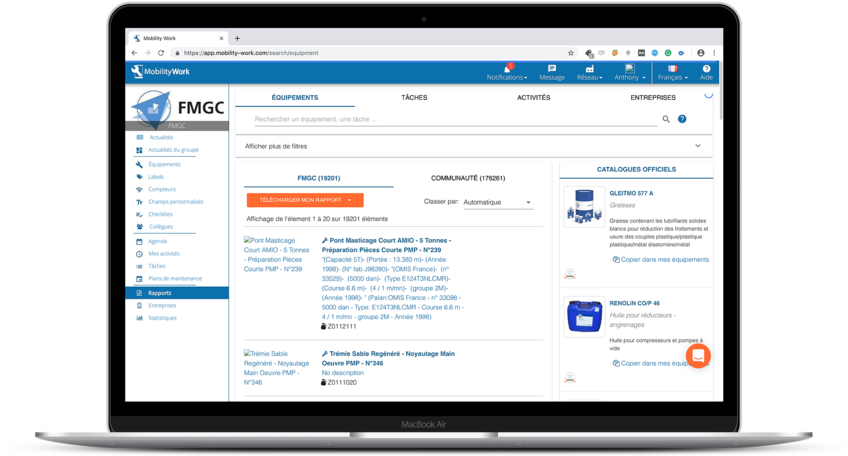
Access the official product catalog of our suppliers via your Mobility Work CMMS
Delivery times
Businesses must face three types of delivery risks, whose origin is sometimes the most common (meteorological, social, human... ):
- The Defect or Delay in Delivery : any failure to deliver may result in a slowdown or stoppage of the production line.
- Advanced delivery times : this risk, which may seem trivial, can lead to unexpected expenses for buyers. Businesses operating on a just-in-time basis seek to optimize their profit margins by reducing their inventory costs.
In order to limit the possible financial losses linked to a delivery error, companies can agree with their suppliers in advance on specific clauses in their supply contract.
The Legal Factor
Did you know that a buyer can be considered responsible for the legal mistakes of its suppliers? That is why it is highly recommended that businesses of Make their purchasing teams and suppliers aware of the legislation in force, as well as their internal regulations Before engaging in a supply contract. This is an aspect that should not be overlooked, especially in the context of international contracts.
Your reputation
If the impact of the factors mentioned above is measurable in financial or productivity terms, the Reputation of a Company It is difficult to quantify. However, it now plays a key role in the acquisition and retention of customers.
Businesses are linked to their customers through a more or less tacit commitment. Each production delay or quality defect will have a negative impact on the image that the end customer has of his partner.
On the other hand, before trying a new product or service, consumers will no longer only consider price or quality, but also the overall image that the brand conveys. This is not only about the legal exemplarity of the company. TEABranding is closely linked to consumer values, ethical or moral issues.
However, an organization's reputation is built not only on its actions but also on those of its partners. It is therefore important to choose them carefully. Mobility Work is the first community CMMS. Its users can Benefit from the Community's Best Maintenance Practices, but also from his experience with various suppliers.
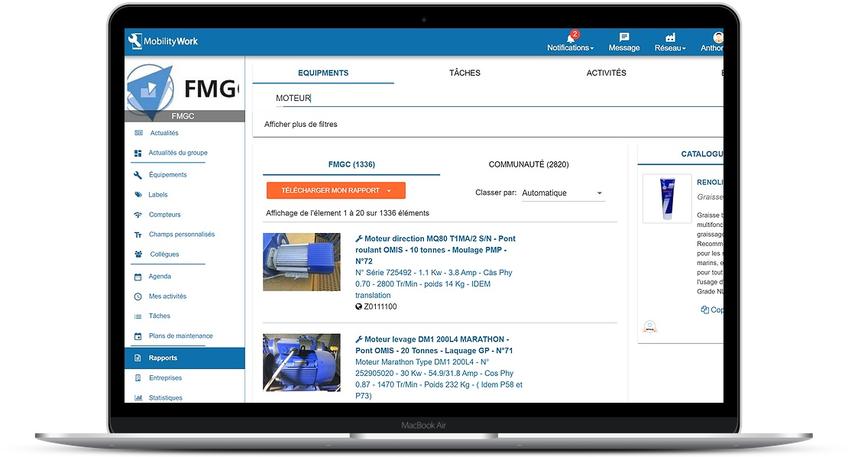
Consult the profile of our suppliers and contact them directly from your next-generation CMMS
Users have the possibility of sharing their contacts and creating a common address book. They can comment on their experiences and talk to other members of the community about them.
The value of choosing the right partner
With the advent of new consumption patterns, the supply chain is undergoing major changes. Buyers are moving away from traditional distribution channels in favor of direct relationships with manufacturers. By removing this strategic link, businesses become more vulnerable to supply chain hazards.
Indeed, there are many facets of supplier risk. Among the elements mentioned above, some are the direct result of poor supply management: delivery times, quality or even reputation. In addition, there are commercial risks, which are the main concern of procurement teams. Their role is then to limit the risks of financial losses linked, for example, to avoid billing.
Another factor of increasing importance is Security and Data Protection. As a customer, you have the right to control the use and storage of your data by your suppliers. Before concluding a supply contract, make sure that your partner complies with the standards and practices in this area and that your data will be protected in the event of hacking.
Give yourself the means to achieve your ambitions
Supply chain risk management will therefore take multiple forms, depending on the nature of your activities and your strategic orientation. Perhaps your organization will be more sensitive to one risk factor than another. One Adapted Risk Management Strategy will bring a lot of benefits to your business.
Develop a supply chain risk management strategy?
Having a better understanding of the risks threatening your supply chain gives you a real Competitive advantage. When you establish a structured set of responsible practices, you benefit from better control of your supply chain and manage your activities according to their level of criticality. You ensure its efficiency and flexibility, as well as the fluidity of its operations.
The centralization and rationalization of your purchasing processes also leads toOverall improvement of your production chain. You improve your productivity by reducing downtime, and reducing operational costs. In addition, you strengthen your brand image thanks to the transparency of your purchasing strategy.
How to develop your supply chain strategy?
Although developing a strategy is specific to each entity, there are nevertheless a set of best practices that will guide you in your approach:
- Conduct a Risk Map. Essential step: the analysis of your supply chain. Before formalizing your strategy, it is essential that you have a good visibility of the actors and processes governing your supply chain. You will thus be able to measure your level of vulnerability to each of the factors mentioned above and think about an adapted strategy.
- Find the right solutions. Once risks are identified, make sure you have the methods you need to respond to any issues in your supply chain while limiting potential losses. The ISO 28000 standard provides companies with a reference framework defining the fundamentals of a Security Management System for the Supply Chain (SCMSCA).
- Optimize your human resources. Ensure that all of your employees and suppliers comply with your risk management strategy. Do not hesitate to conduct audits or to offer them training.
- Control your activities. Put in place processes to regularly monitor operational, ethical and financial risks, as well as the performance of your suppliers. To do this, do not hesitate to use monitoring, communication and reporting tools, such as Mobility Work next-gen CMMS.
- Collaborate with your suppliers. As part of your SRM strategy, take care of the commitment of your suppliers. To do this, do not hesitate to develop strategies and preferred communication channels. To ensure the effectiveness of your relationships, you can develop systems for evaluating your suppliers, using SRM software.
Adapting your strategy to suppliers
Whatever their size or sector of activity, Supplier Risk Management is a Growing Challenge for Businesses. Following the 2008 financial crisis, a large number of tier 1 suppliers (direct suppliers) and tier 2 suppliers (suppliers of suppliers) found themselves in difficulty. It has also highlighted the great dependence of companies on their suppliers.
Supplier risk management has finally become a priority for a large number of customers. Faced with the multifaceted nature of supplier risk (financial, contractual, business, technical or CSR), the Purchasing function plays a key role in identifying and eliminating these risks. Supplier risk management is then integrated into a more global vision of the supply chain: your SRM strategy.
Many industrial players have already successfully deployed Mobility Work CMMS in order to improve the management of their budget and their industrial maintenance routines. A year ago, we opened our Mobility Work Hub platform in order to Simplify Exchanges Between Suppliers and Industrial Players. Mobility Work Users can thus plan, manage and monitor the interventions of their suppliers or service providers.
Any questions?
Contact us to discover the first CMMS that can be deployed in 3 weeks.